

 Published sources
 Product details checked
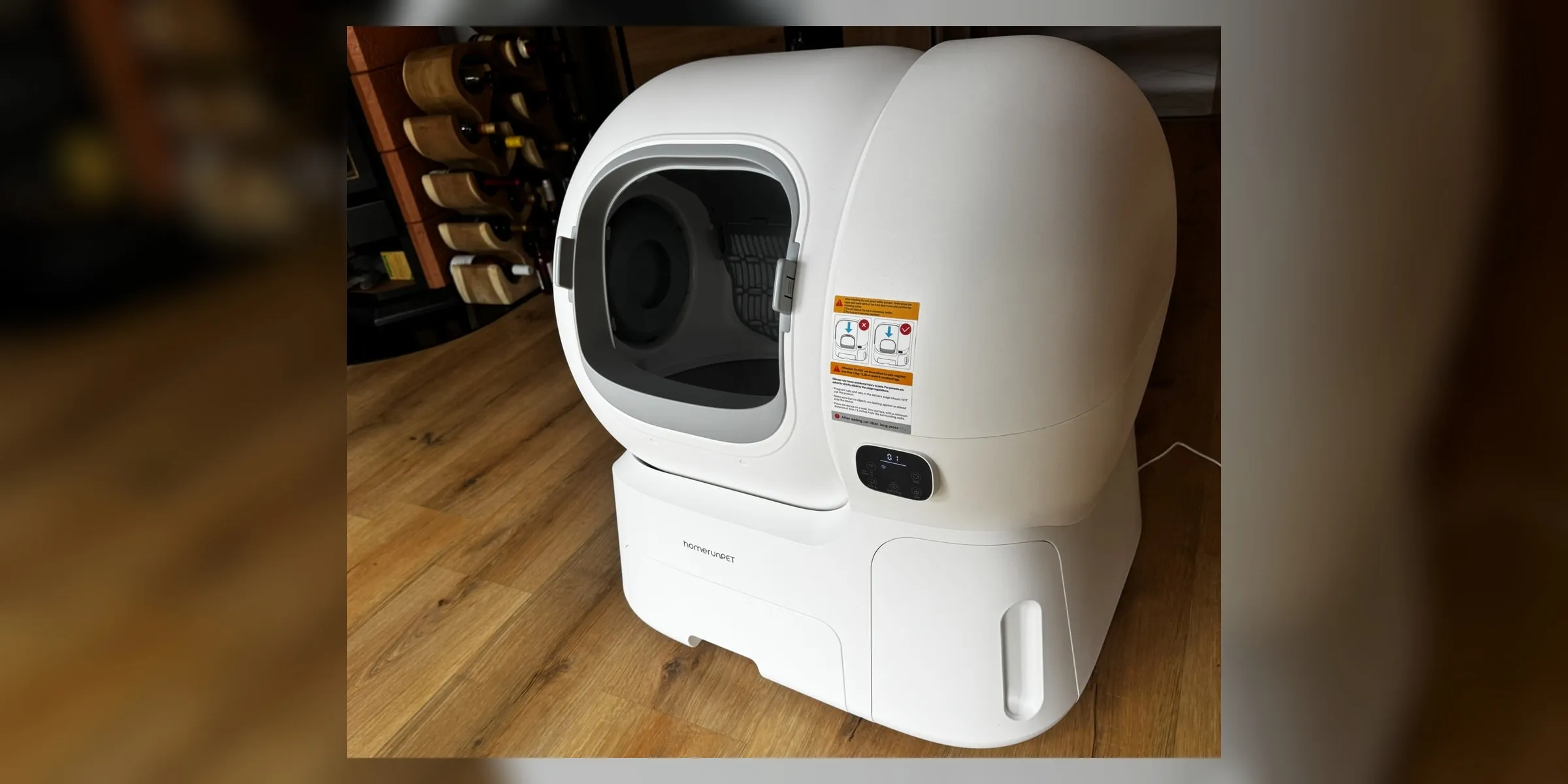
Two automatic litter boxes. Completely different design philosophies. The homerunPET CS106 is the largest self-cleaning litter box on the market and the first model with a built-in auto-refill reservoir. The Litter-Robot 4 is a well-established smart litter box with strong per-cat analytics. If you’ve narrowed the choice down to these two, this comparison covers the 16 specifications that actually matter—each verified against homerunPET and Whisker product documentation, and combined with our hands-on observations from using the CS106.
Quick Answer: For owners of large cats and multi-cat households, the homerunPET CS106 is the better fit. It offers a wider entry (18” vs 15.75”), a larger interior, a 12 L waste bin, and the only built-in auto-refill system in this comparison—delivering up to 20 hands-free days versus 8 for the Litter-Robot 4. The Litter-Robot 4 remains the right pick if you want per-cat AI analytics through Whisker+ or a smaller footprint.
Affiliate disclosure: homerunPET provided one CS106 unit free of charge for testing. This article contains affiliate links — we earn a commission if you buy through them, at no extra cost to you. Editorial decisions, including which categories we awarded to the Litter-Robot 4, were made entirely by Zoolory. See the full disclosure at the bottom of this article.
See the homerunPET CS106 Price →This comparison combines hands-on use of the CS106 (setup, daily workflow, app, safety design, large-cat suitability) with a feature-by-feature analysis of the Litter-Robot 4 based on Whisker’s current product documentation and published independent reviews. We did not have an LR4 unit on hand for parallel testing; where we cite an LR4 spec, it is a Whisker-published figure.
In this comparison you’ll find:
- A 16-point side-by-side spec table (with the differences that matter highlighted)
- Category-by-category breakdowns: interior space, mechanism, auto-refill, safety, odor, noise, app, footprint, and warranty
- Honest “which one wins for which household” verdicts
- Real numbers, not marketing language
Quick Comparison Table
-
homerunPET CS106 Self-Cleaning Litter Box
homerunPET
World's largest self-cleaning litter box (106 L dome) and the first model with a built-in auto-refill reservoir. Engineered for big breeds, low noise (38.8 dB), and up to 20 hands-free days.
- 106 L dome — ~40% bigger than Litter-Robot 4
- Industry-first 4.5 L auto-refill litter reservoir
- Fits cats up to 25 lbs / 11.3 kg
- Best for
- Large cats (Maine Coon, Ragdoll) up to 25 lbs and multi-cat households
- Key feature
- Auto-refill + world's biggest dome
-
Litter-Robot 4 Supply Bundle
Whisker
Premium self-cleaning litter box with app control, weight tracking, and comprehensive supply bundle included.
- Automatic sifting separates waste from clean litter
- WiFi app tracks visits and weight trends
- Sealed, carbon-filtered waste drawer
- Best for
- Multi-cat households, large cats, convenience-focused owners
- Key feature
- See product page
Review the linked product page before purchasing.
The 16-Point Spec Sheet
The single most useful artifact in any litter box comparison is a spec sheet you can scan in 30 seconds. Here is the full one, verified against Whisker’s product page for the LR4 and homerunPET’s product documentation for the CS106. Bold marks the better number in each row where there is a clear winner.
| # | Criterion | homerunPET CS106 | Litter-Robot 4 (Whisker) |
|---|
| 2 | Interior dome / globe volume | 106 L (homerunPET-published) | Not published by Whisker | | 3 | Entry opening width | 18 in / 46 cm | 15.75 in / ~40 cm | | 4 | Interior height | ~28 in inside dome | 16.5 in | | 5 | Footprint | 70 × 60 cm (27.4” × 23.6”) | 56 × 69 cm (22” × 27”) | | 6 | Device height | 71 cm / 28.1” | 75 cm / 29.5” | | 7 | Device weight | 20 kg / 44 lbs | ~11 kg / 24 lbs | | 8 | Max cat weight | 25 lbs / 11.3 kg | 25 lbs / 11.3 kg | | 9 | Min cat weight | ~3.3 lbs / 1.5 kg | 3 lbs | | 10 | Waste bin capacity | 12 L sealed | Smaller (Whisker rates “up to 8 days”) | | 11 | Hands-free days (1 cat) | Up to 20 days | Up to 8 days | | 12 | Auto-refill reservoir | Yes, 4.5 L (built in) | No (optional LitterHopper, sold separately) | | 13 | Manufacturer noise rating | 38.8 dB (homerunPET) | Not published by Whisker (third-party reports ~40–45 dB) | | 14 | Safety system | Anti-pinch bumper + radar + 4 weight sensors | SafeCat™ (laser + weight sensors) | | 15 | Per-cat tracking | Cat Identification by Weight (manual ranges + notes) | Yes — AI per-cat ID (Whisker+ subscription) | | 16 | Warranty / return | 12 mo. + 90-day return (1–3 yr extended protection optional) | 1 yr (3-yr WhiskerCare optional, +) |
Across the rows with a clear winner, the CS106 leads on interior volume, entry width, interior height, waste-bin capacity, hands-free days, auto-refill, and manufacturer-rated noise. The LR4 leads on footprint, device weight, minimum cat weight, and AI per-cat tracking. Several rows are effective ties, including maximum cat weight, device height, safety architecture, and warranty. Below we walk through each category in detail. Note that both units offer per-cat tracking, but by different methods—the CS106 identifies cats by weight, the LR4 layers AI analytics on top via Whisker+; we cover the distinction in the app section below.
1. Interior Space & Cat Comfort
Winner: homerunPET CS106
The CS106’s interior dome volume of 106 liters is homerunPET’s headline specification and the basis for their “world’s biggest self-cleaning litter box” claim. The number is published by homerunPET and is consistent with the measured exterior dimensions. Whisker does not publish a comparable globe-volume figure for the Litter-Robot 4; what they do publish are the interior dimensions—19” wide × 18” deep × 16.5” tall. That’s a generous globe, but it is meaningfully smaller than the CS106’s interior.
The practical effect shows up at the entry. The CS106 has an 18-inch (46 cm) wide opening; the LR4 has a 15.75-inch (40 cm) square opening. The 2.25-inch difference doesn’t sound dramatic on paper, but for a Maine Coon (typical shoulder width ~22 cm with coat), Ragdoll, or Norwegian Forest Cat, that extra clearance is the difference between a comfortable habit and an avoidance behavior.
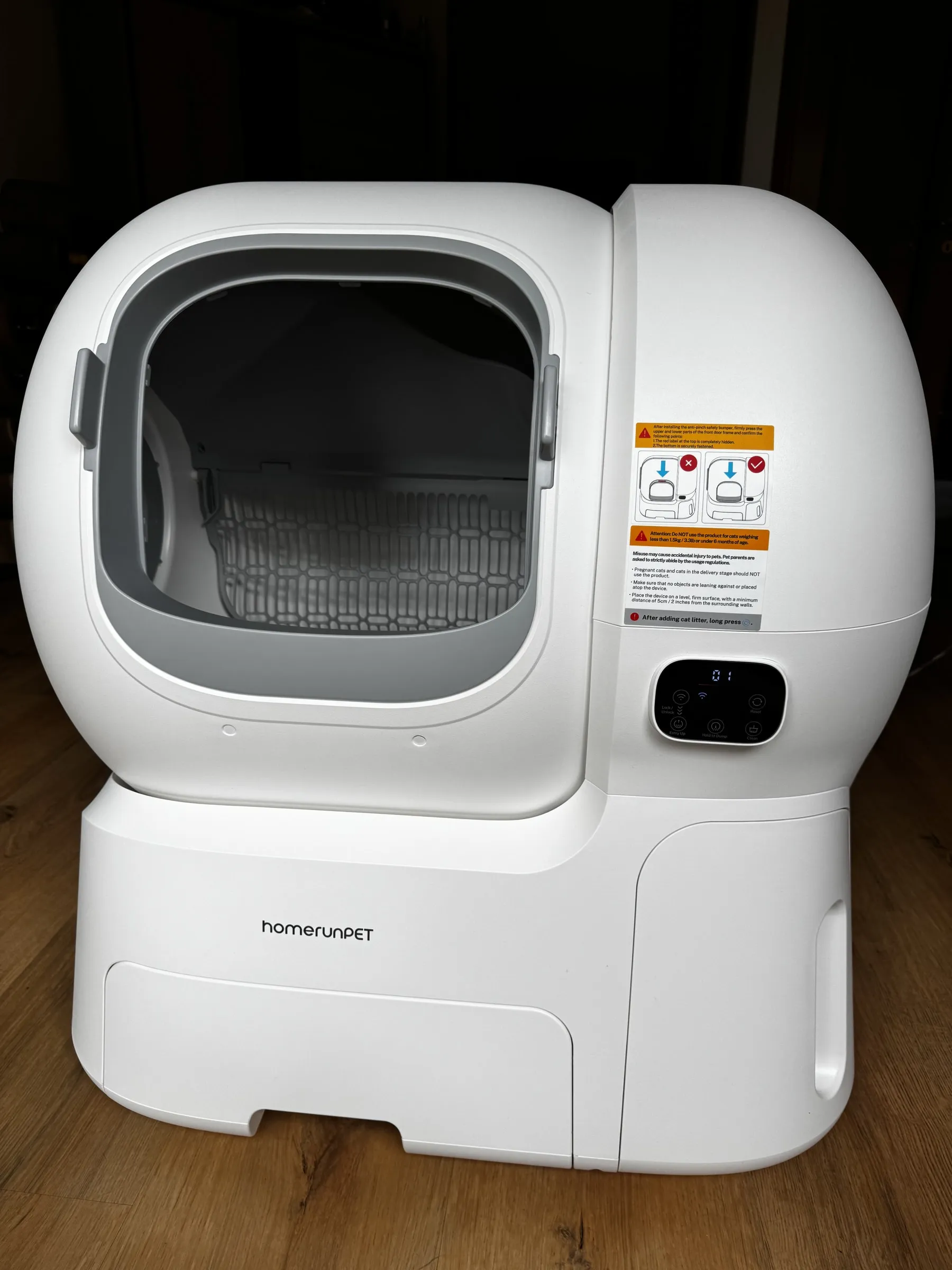
Looking purely at the published interior dimensions, the LR4’s globe is generous for an average cat but tighter for a large breed once the cat needs to turn around inside; the CS106’s 106 L dome leaves visibly more room to do so. Standing in front of the CS106 in person, the dome interior is bright (interior LED), and the opening is wide enough that you can reach all the way to the back wall to wipe it down without contorting—not a small thing for a device you’ll service every few weeks. For an adult Maine Coon (typical body length 80–100 cm including tail, shoulder width ~22 cm with coat), the spec difference matters in practice.
Bottom line: If your cat is over 12 lbs / 5.5 kg, the CS106’s interior is the safer specification. If your cats are under 10 lbs, the LR4’s globe is more than sufficient.
 Check the CS106 for Large Cats →
2. Cleaning Mechanism & Reliability
Winner: tie (slight edge to CS106 for tofu/biodegradable users)
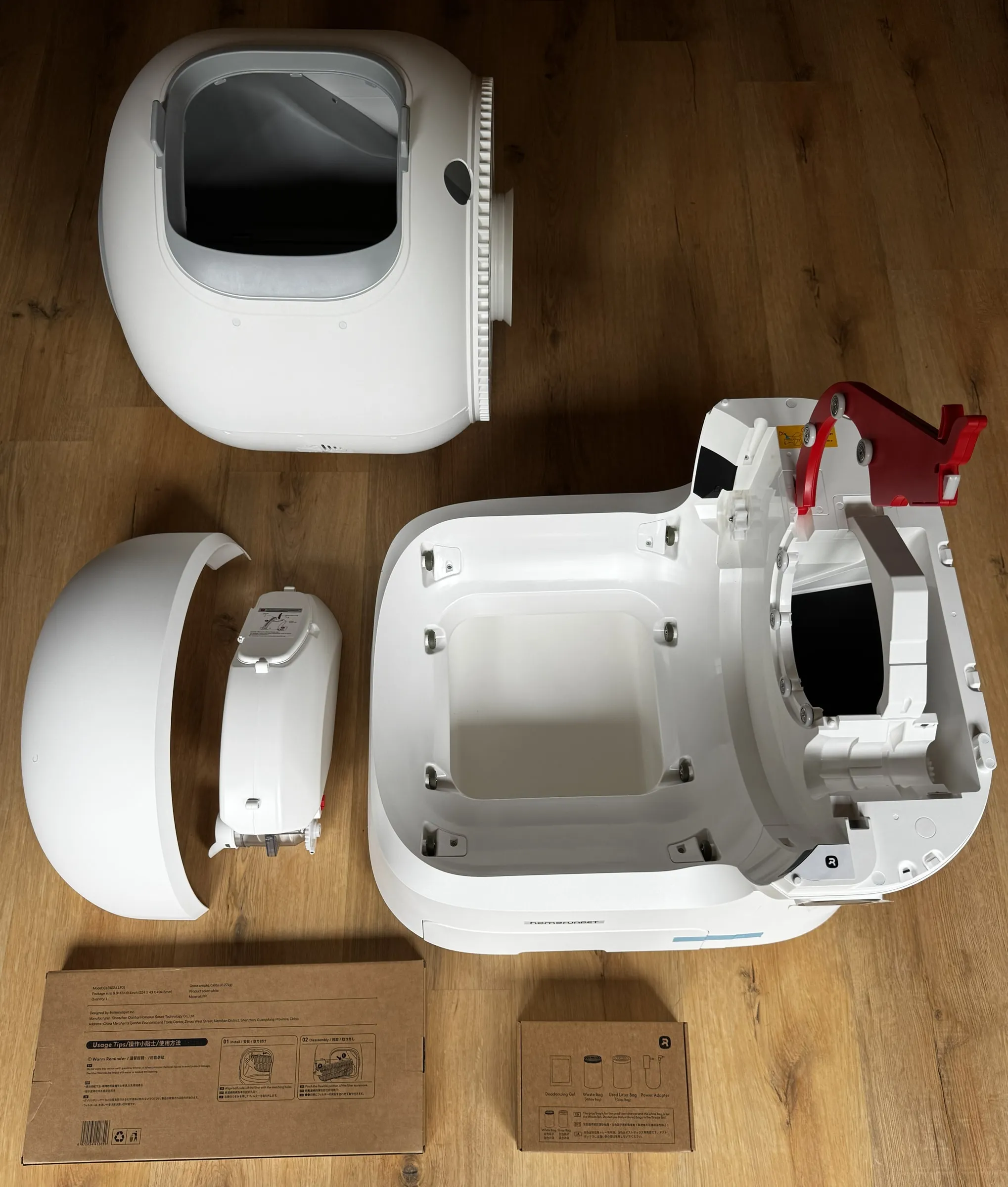
Both units use a rotating drum with a sifting screen. After a cat exits, the drum (a globe on the LR4, a dome on the CS106) tips and rotates; clumps fall onto a perforated separator; clean litter returns to the bed; waste drops into the sealed drawer below. Mechanically, both are well-engineered models of the same core idea, and both are quieter than rake-style boxes.
The differences are at the edges:
- Cycle time. The CS106 cat-exit-to-ready cycle takes roughly a minute (including a short settle delay before motion starts). The LR4 cycle is comparable in duration; both are slower than rake-style designs by design, because the sifting action takes time.
- Sifter aperture. The CS106 ships with two sifter inserts (large and fine). The fine aperture is the one designed for softer-clump substrates like tofu and cassava. The LR4 is designed to work with clumping/scoopable litter; Whisker officially lists non-clumping, loose-clumping, newspaper-based, and wood-pellet litters as not compatible.
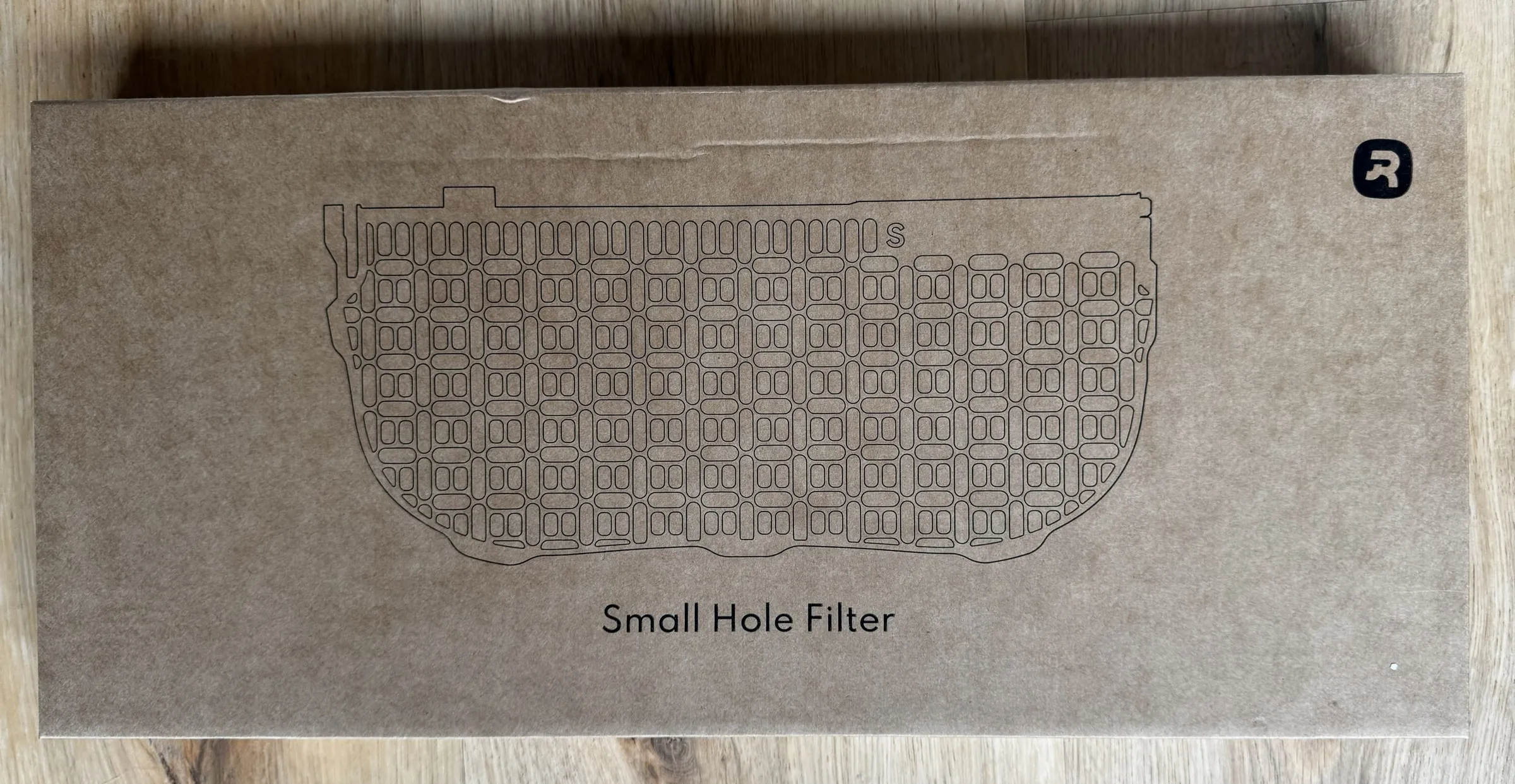
If you intend to use tofu, cassava, or a tofu-bentonite blend, the CS106 is the more litter-flexible choice. If you’re committed to clumping clay, both perform well.
3. The Auto-Refill System (The Defining Difference)
Winner: homerunPET CS106
The biggest single hardware difference between these two units is the 4.5-liter auto-refill reservoir built into the CS106. After each cleaning cycle, a Time-of-Flight optical sensor reads the litter level in the bed; if it has dropped below threshold, a small actuator releases the right amount of litter to top it back up. CNN Underscored named the CS106 Best Self-Refilling Litter Box 2026 for this feature.
The Litter-Robot 4 does not have a built-in equivalent. Whisker sells the LitterHopper as a separate add-on (sold as part of the Litter-Robot 4 LitterHopper Bundle), but it is an external accessory mounted on top of the globe, not an integrated reservoir.
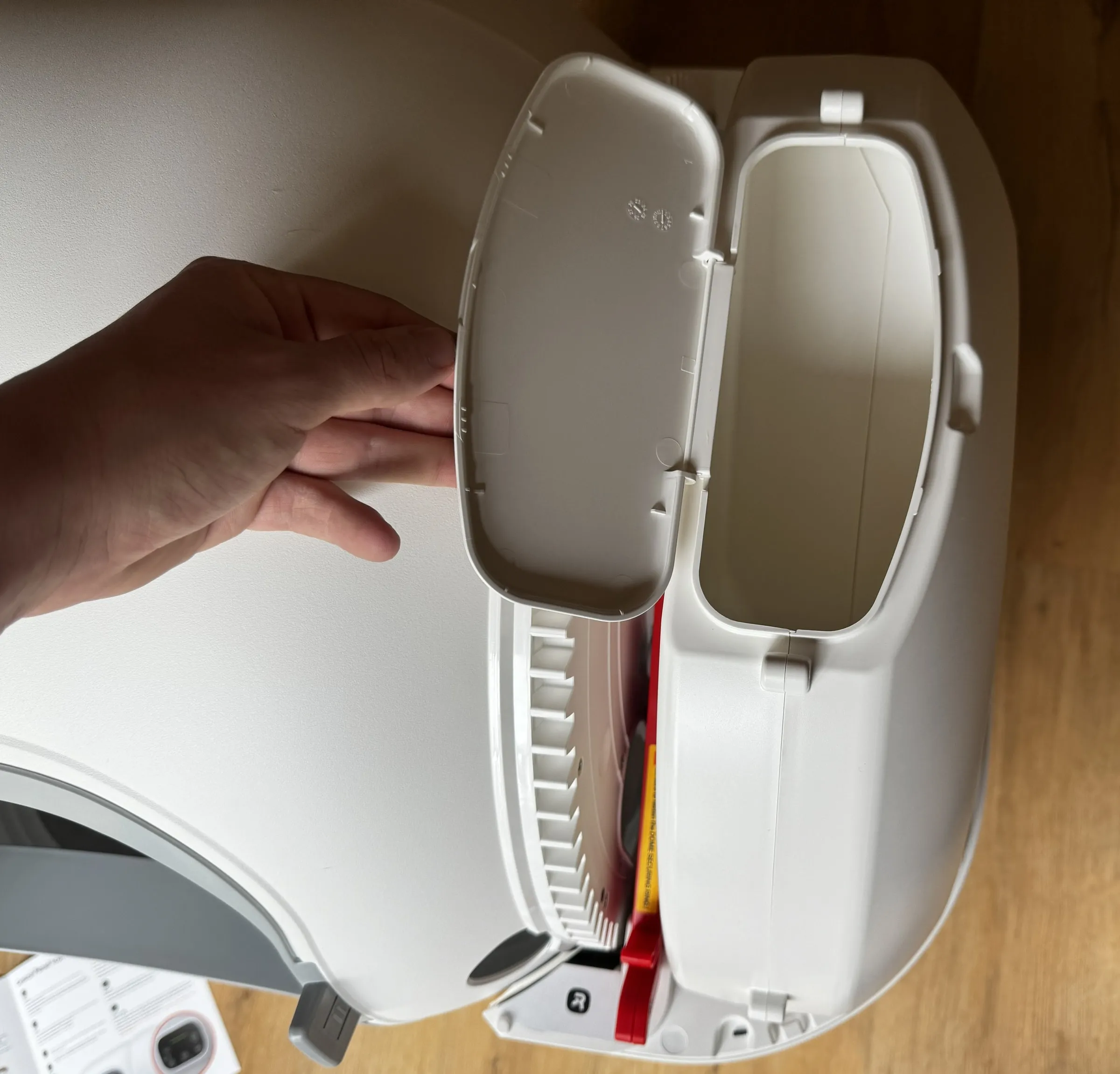
This single feature reshapes the maintenance calendar:
- CS106 with auto-refill engaged: the litter bed stays at correct depth for up to 14 days without manual top-up
- LR4 without LitterHopper: owner refills the globe manually every 5–10 days depending on cat count
If you’re comparing “out of the box” capability, the auto-refill is the CS106’s headline advantage and the single most important spec on this comparison page.
See the Auto-Refill in Action →4. Hands-Free Operating Days
Winner: homerunPET CS106
This is downstream of capacity + auto-refill, but it is the metric busy owners actually care about.
| Scenario | CS106 | Litter-Robot 4 |
|---|---|---|
| 1 cat, hands-free | Up to 20 days | Up to 8 days |
| 2 cats, hands-free | ~10–14 days | ~5–7 days |
| 3 cats, hands-free | ~7 days | ~3–5 days |
Both numbers are manufacturer-published. In our initial single-cat hands-on use the CS106 cadence felt consistent with homerunPET’s rating—roughly two weeks between waste-bin changes and reservoir top-ups; we’ll update the table with our own multi-month tally after extended use. The LR4’s 8-day single-cat rating is Whisker-published and consistent with independent reviewer reports.
For travelers, pet-sitters, and anyone with a calendar that gets in the way of a litter scoop, the CS106’s roughly 2.5× hands-free range is the single biggest quality-of-life difference between the two products.
5. Safety Architecture
Winner: slight edge to homerunPET CS106 (redundancy)
Both units take cycling safety seriously and there are no recorded incidents we are aware of for either model. The architectures differ:
- homerunPET CS106: mechanical anti-pinch bumper at the entry + radar proximity sensor at the opening + 4 weight sensors under the bed. The bumper is independent of software—cutting power does not disable it.
- Litter-Robot 4: SafeCat™ system using a laser-based sensor at the entry + weight sensors. Software-controlled cycle interrupt.
The CS106’s mechanical bumper adds a third, hardware-only failsafe that the LR4 doesn’t replicate. For most households this is a marginal difference; for owners who have had a prior negative experience with smart-litter-box safety, it is reassurance worth noting.
Both have separate kitten-protection modes that disable cycling for cats under a weight threshold (LR4: 3 lbs minimum; CS106: ~1.5 kg / 3.3 lbs minimum).
6. Odor Control
Winner: tie
Both units use a sealed waste drawer plus an active odor-control element:
- CS106: included Fresh Gel deodorizer + sealed 12 L drawer; up to 14 days of bin time for one cat
- LR4: OdorTrap™ replaceable pet-friendly cartridge + carbon filter; Whisker recommends replacement every 2–4 weeks
In our hands-on use the CS106’s sealed drawer kept odor effectively contained from a normal standing distance—even with the unit in a small room. Independent reviews of the LR4 give Whisker’s OdorTrap similar marks; it’s a proven, well-rated system.
The honest caveat for both: the interior of the dome/globe (separate from the sealed drawer) will start to register a faint note around day 10–14 for most cats. Plan a full bed swap and wipe-down roughly every 30 days regardless of which unit you choose.
7. Noise
Winner: homerunPET CS106 (verifiable spec)
homerunPET publishes a 38.8 dB noise rating for the CS106—a figure also referenced by Cats.com in their independent review. That’s quieter than a typical refrigerator hum, and in our hands-on use the cycle was subjectively quieter than the refrigerator in the same room.
Whisker does not publish an official decibel rating for the Litter-Robot 4.
For bedroom or living-room placement, the CS106 is the more conservative choice. Both have a “night mode” that suspends cycling during configurable quiet hours.
8. Litter Compatibility
Winner: homerunPET CS106
- CS106 officially supports: clumping bentonite/clay, tofu, cassava, tofu-bentonite blends. Two sifter inserts ship in the box (standard and fine).
- Litter-Robot 4: Whisker states the LR4 works with clumping/scoopable litter and explicitly lists non-clumping, loose-clumping, newspaper-based, and wood-pellet litters as not compatible. Within the clumping/scoopable category, most owners use clumping clay.
If you have a cat already imprinted on a non-clay litter, or if biodegradability matters to you (tofu and cassava are both plant-based), the CS106 is the more flexible choice.
9. App & Smart Features
Winner: Litter-Robot 4 (richer per-cat analytics)
Both apps offer per-cat tracking—the difference is depth. Whisker’s app—free, with optional Whisker+ subscription—offers:
- Per-cat identification by weight (3 lbs minimum)
- Trended views of weight, visit counts, and cycle counts per cat
- Daily recap reports (Whisker+)
- Time-of-day insights and visit-duration trends (Whisker+)
- Long-term tracking up to 2 years (Whisker+)
The CS106’s app also distinguishes cats—through its Cat Identification by Weight feature:
- Cat Identification by Weight: you manually assign each cat to a specific weight range and add per-pet notes, and the system distinguishes cats in a multi-cat household by their weight differences
- Manual cycle start
- Per-cat and device-level visit log
- Night mode, scheduling, push notifications
- Bin-fill alerts, diagnostics, troubleshooting
One honest limitation of a weight-based approach: when two cats have very similar body weights, the difference can fall within the machine’s measurement tolerance of roughly 200 grams, which makes them harder for the system to tell apart reliably. Cats with a clear weight gap are distinguished without issue.
If you want per-cat tracking by weight plus bin-fill alerts and you don’t need the Whisker+ analytics suite, the CS106’s app covers the essentials.
Wi-Fi note: Both units are 2.4 GHz only. Confirm your router has a 2.4 GHz SSID enabled before buying either.
10. Footprint & Setup
Winner: Litter-Robot 4
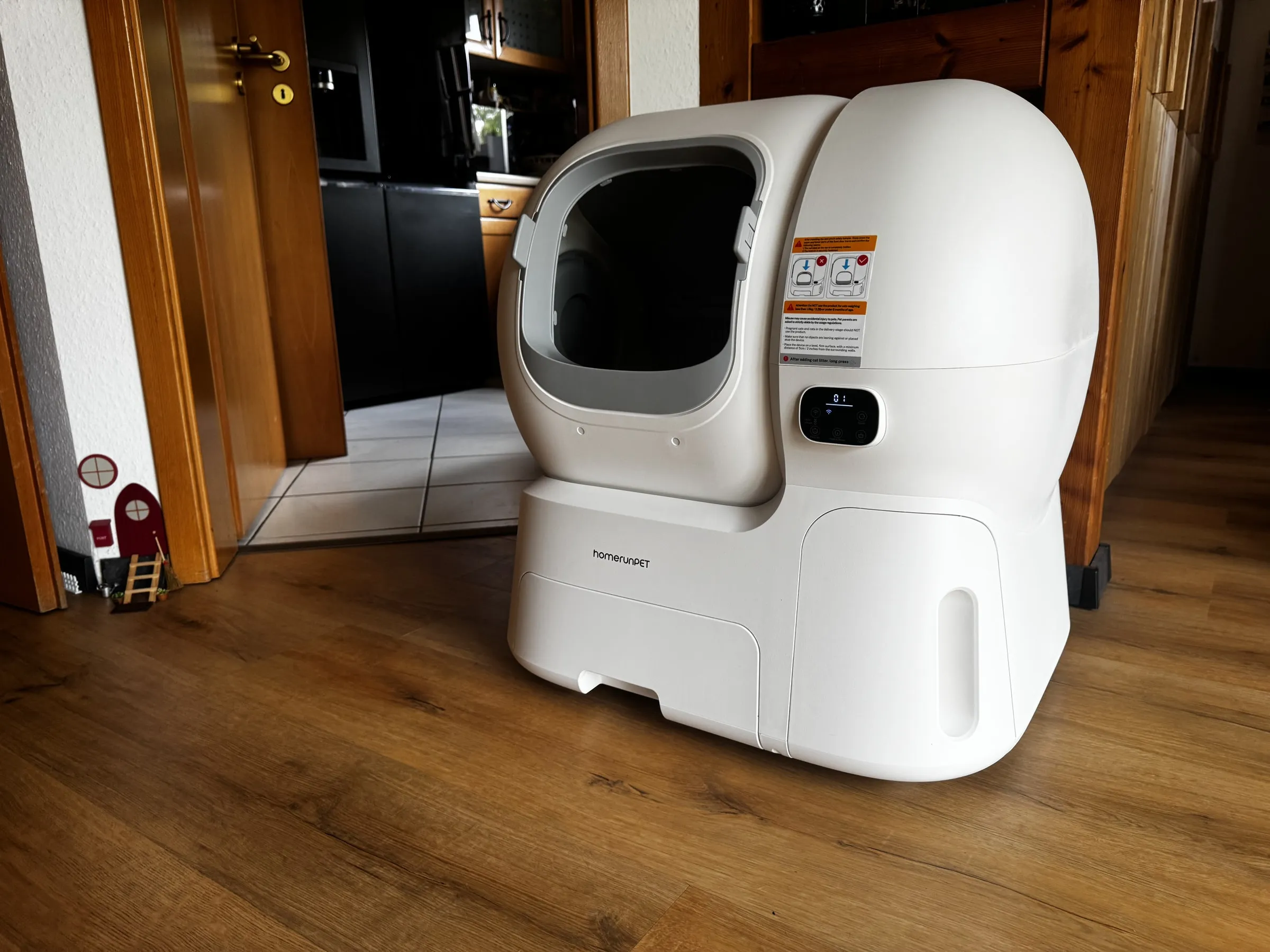
Both units ship fully assembled, which is the single biggest quality-of-life upgrade over previous-generation automatic litter boxes. Pulling the CS106 out of its carton makes the 20 kg spec real—it’s a two-person carry up stairs, and a one-person job only on flat floors.
Where they differ is floor space and weight:
| Spec | CS106 | Litter-Robot 4 |
|---|---|---|
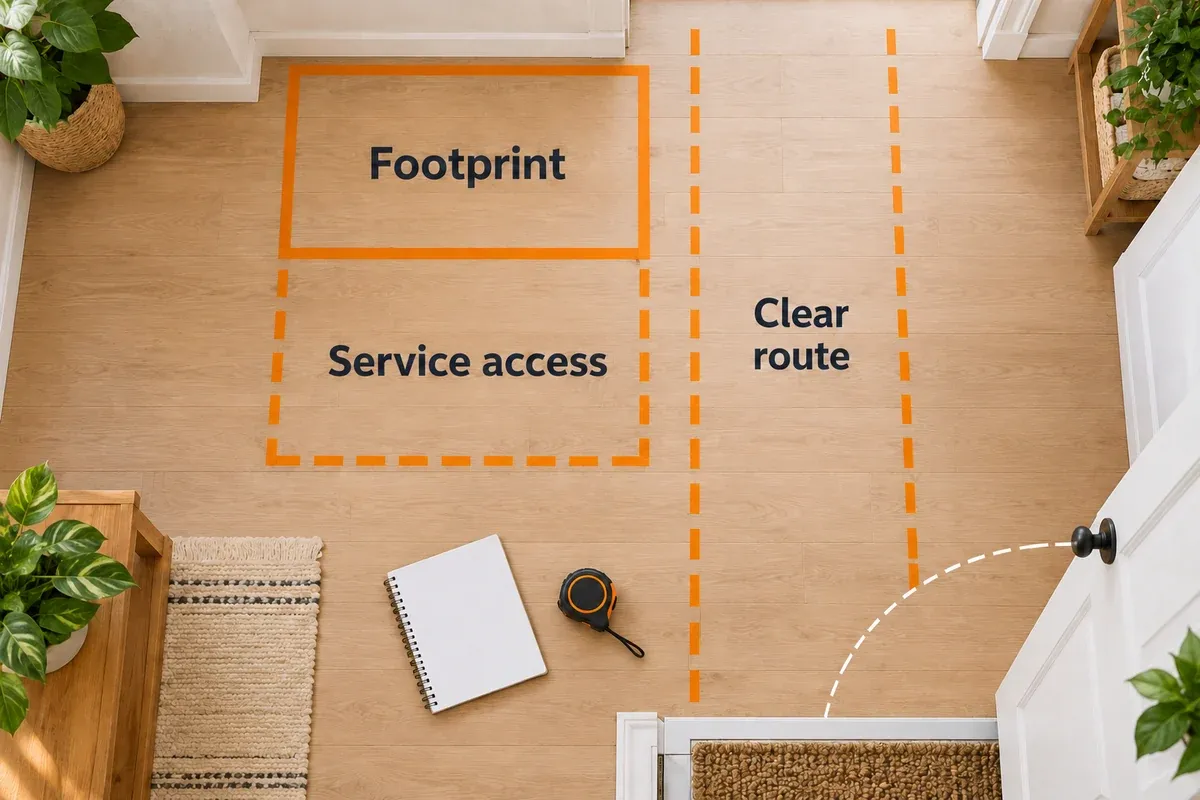
| Footprint | 70 × 60 cm | 56 × 69 cm |
| Height | 71 cm | 75 cm |
| Weight | 20 kg | ~11 kg |
| Floor-area footprint | 0.42 m² | 0.39 m² |
The LR4 is 45% lighter and has a slightly smaller floor footprint. The difference matters most in two scenarios:
- Small apartments under 30 m² — even half a square meter matters
- Older floors or upper-floor apartments with weight considerations
If you have to lift the unit periodically (moving, deep cleans), the LR4 is meaningfully easier to handle. The CS106 at 20 kg is a two-person carry for distance.
It’s worth being clear about why the CS106 is heavy: the 20 kg mass and the extra-wide base are intentional stability features, not just bulk. They keep the unit planted when a 25 lb Maine Coon—or two cats in quick succession—jumps in and out, so the dome never rocks or shifts during a cycle. The weight is an engineering decision in service of safety; the trade-off is that you should treat the CS106 as a permanent fixture rather than something you’ll reposition often.
11. Warranty & Returns
Warranty terms vary by model and bundle.
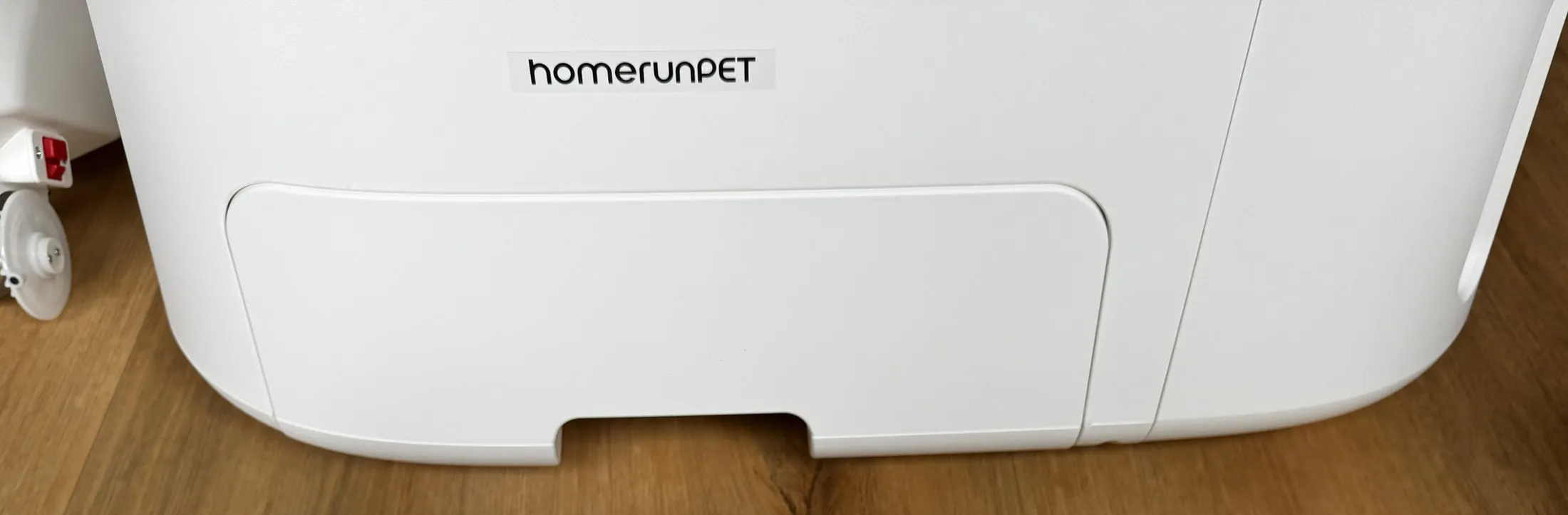
- homerunPET CS106: 12-month manufacturer’s warranty + 90-day return policy, with optional extended protection plans (1 to 3 additional years) available for purchase through service provider Xcotton.
- Litter-Robot 4: 1-year standard warranty; WhiskerCare 3-year extension available for purchase.
The CS106 offers more interior capacity, auto-refill, and a larger waste bin.
For ongoing costs:
- CS106: waste bags (included supply lasts ~2 months), Fresh Gel refills (~30 days)
- LR4: OdorTrap refills (2–4 weeks), liners, carbon filters
Both units require ongoing supplies. Compare the replacement routine for bags, liners, filters, deodorizer, and litter before choosing.
12. Build & Materials
Both units use ABS plastic with metal internal components. The CS106’s interior is finished in a matte ivory that does not show scuffs as readily as the LR4’s white globe. The LR4 has a slightly more refined exterior finish at the seams; the CS106 wins on interior accessibility (an adult can physically reach inside to clean).
For pet households where the litter box lives in a visible part of the home, both look like modern appliances rather than utilitarian boxes. Aesthetics here are a wash.
Side-by-Side Verdict: Who Should Buy What
This is the part that matters. The CS106 wins our overall recommendation, but the LR4 is the correct choice for a specific subset of buyers.
Buy the homerunPET CS106 if you:
- Have large cats (Maine Coon, Ragdoll, Norwegian Forest Cat, British Shorthair males) or any cat over 12 lbs / 5.5 kg
- Have a multi-cat household (2 or more cats)
- Travel frequently and want 20 hands-free days
- Want a built-in auto-refill without buying a separate accessory
- Use or want to switch to tofu / cassava / biodegradable litter
- Want the lowest manufacturer-rated noise in the tier (38.8 dB)
- Have floor space for a 70 × 60 cm device
Buy the Litter-Robot 4 if you:
- Want per-cat AI analytics for health monitoring
- Live in a small apartment (under 30 m²) where footprint matters
- Need to move the unit periodically (lighter at 11 kg)
- Have cats under 5 lbs / 3 lbs minimum and want a smart box that supports them
- Prefer the larger Whisker community for troubleshooting and accessories
- Want the option of 3-year WhiskerCare warranty
How We Verified the Specifications
To keep this comparison honest, here’s where each number came from:
-
CS106 specifications: all hardware specs (106 L dome, 4.5 L auto-refill, 12 L waste bin, 38.8 dB rating, 18” entry, 25 lbs max cat weight, 70 × 60 × 71 cm, 20 kg, 20-day hands-free rating) are homerunPET-published. Where we cite a hands-on impression (build feel, cycle smoothness, perceived noise relative to a refrigerator), that comes from our own use in a home environment.
-
Litter-Robot 4 specifications: taken from Whisker’s official LR4 product page (entry 15.75” × 15.75”, interior height 16.5”, interior 19” × 18”, footprint 22” × 27”, weight 24 lbs, min cat 3 lbs, max cat 25 lbs, hands-free 8 days for 1 cat, 15 VDC power, OdorTrap 2–4 week replacement, clumping/scoopable litter only). Whisker does not publish a globe-volume figure or a decibel noise rating; we noted this transparently in the table rather than estimating.
-
What we did not do: we did not have an LR4 unit on hand for parallel hands-on testing; all LR4 figures in this article are Whisker-published or sourced from independent published reviews. We did not run a calibrated noise measurement on either unit. Where we used a manufacturer figure rather than our own number, we say so explicitly in-line.
Frequently Asked Questions
Is the homerunPET CS106 really better than the Litter-Robot 4?
For large cats and multi-cat households, yes—the CS106 has a wider entry (18” vs 15.75”), larger interior, a 4.5 L auto-refill reservoir the LR4 doesn’t include, and roughly 2.5× the single-cat hands-free interval (20 vs 8 days). The Litter-Robot 4 is the better choice if you specifically want per-cat AI analytics via Whisker+ or have a footprint constraint.
Which one is better for a Maine Coon?
The CS106. The 18-inch (46 cm) entry and the 106-liter interior dome (homerunPET-published) give more turn-around room than the LR4’s 15.75” × 15.75” entry and Whisker’s published 19” × 18” × 16.5” globe interior. Both units rate up to 25 lbs maximum cat weight, but rated max weight isn’t the same as comfortable interior dimensions—for breeds with the body length and coat volume of a Maine Coon, the extra interior space matters in daily use.
Does the Litter-Robot 4 have an auto-refill feature?
Not built in. Whisker sells the LitterHopper as a separate accessory mounted on top of the globe (available bundled as the Litter-Robot 4 LitterHopper Bundle). The CS106 includes a 4.5-liter auto-refill reservoir as standard. If automatic litter top-up matters to you and you compare “what you get ”, the CS106 includes it; the LR4 does not.
Which is quieter, the CS106 or the LR4?
homerunPET rates the CS106 at 38.8 dB, a figure also cited by Cats.com. Whisker does not publish an official decibel rating for the LR4; third-party reports place it in the 40–45 dB range. Neither unit is loud in absolute terms and both have configurable night modes that suspend cycling during user-defined quiet hours.
Can the Litter-Robot 4 use tofu litter?
Whisker states the Litter-Robot 4 works with clumping/scoopable litter and lists non-clumping, loose-clumping, newspaper-based, and wood-pellet litters as not compatible. The CS106 officially supports clumping clay, tofu, cassava, and tofu-bentonite blends, and ships with a fine-aperture sifter insert designed for softer-clump substrates. If biodegradable, tofu, or cassava litter matters to you, the CS106 is the more flexible documented choice.
How many days can you leave each litter box unattended?
For one cat, homerunPET rates the CS106 at up to 20 days hands-free (waste bin + auto-refill range). Whisker rates the LR4 at up to 8 days hands-free for one cat. For two cats, halve both numbers; for three cats, divide by roughly three. In our initial single-cat hands-on use, the CS106 cadence felt consistent with homerunPET’s published range.
Is the CS106 too heavy or too big for an apartment?
It is a substantial device: 70 × 60 × 71 cm and ~20 kg. The Litter-Robot 4 is meaningfully lighter at ~11 kg with a slightly smaller floor footprint (56 × 69 cm). If your home has under 30 m² of floor area or you need to move the unit periodically, the LR4 is the more practical choice. If you have a hallway nook, bathroom, or utility-area for a dedicated litter station, the CS106’s size pays back in interior space.
Which one has a better app?
The Litter-Robot 4 wins on app depth. Whisker’s app offers per-cat identification by weight (3 lbs minimum), trended visit and weight data per cat, and longer-term analytics (up to 2 years) via the optional Whisker+ subscription. The CS106’s app also identifies cats—via its Cat Identification by Weight feature, where you assign each cat to a weight range and add per-pet notes—plus remote cycle, visit log, night mode, bin-fill alerts and diagnostics. The practical limit on the CS106’s approach is that cats whose weights are within ~200 g of each other can be hard to tell apart; the LR4’s AI analytics layer goes deeper for similar-sized multi-cat homes.
Are both safe for kittens?
Neither is fully safe for kittens below the manufacturer-specified minimum weight. The LR4 has a 3-pound minimum. The CS106 has a ~1.5 kg / ~3.3 lb minimum and a built-in Kitten Protection Mode that disables cleaning cycles below that weight. For households with both adult cats and kittens, keep a separate manual box for the kitten until they reach the weight threshold.
What about warranty and returns?
Both offer a 90-day return window. Standard warranty is 12 months on the CS106 and 1 year on the LR4.
Which is the better long-term investment?
If you have large cats, multiple cats, or want true 2-week hands-free intervals, the CS106 delivers more cat comfort and more time saved for its category. If you have one or two average-sized cats or value Whisker+‘s AI per-cat health analytics, the LR4 makes more sense. There is no “wrong” answer in the tier—both are well-engineered and reliable.
Our Final Pick
After hands-on use of the CS106 and a verification pass against Whisker and homerunPET specifications, the homerunPET CS106 is our overall recommendation for the self-cleaning litter box tier in 2026.
It wins on the specs that affect cat comfort (entry width, interior volume), it wins on the specs that affect owner time (hands-free days, auto-refill), and it wins on the spec that affects placement (noise). The Litter-Robot 4 remains a genuinely excellent product and the correct choice for owners who prioritize AI per-cat analytics or a smaller footprint—but on overall value, the CS106 is the more complete device.
Best Overall (Large Cats & Multi-Cat Homes): homerunPET CS106 → Why: largest entry and interior in its category + built-in auto-refill + lowest manufacturer-rated noise (38.8 dB)
Check the homerunPET CS106 Price →Best for Per-Cat Analytics: Litter-Robot 4 → Why: Whisker+ per-cat identification and long-term trending; smaller footprint; lighter unit
Check current price on Amazon →If you want our full hands-on review of the CS106 on its own (setup, daily workflow, app, large-cat suitability, pros & cons), see our homerunPET CS106 review. For the broader category, see our best self-cleaning litter boxes guide and self-cleaning litter boxes for large cats roundup.
Affiliate Disclosure: homerunPET provided one CS106 unit free of charge for testing. This article contains affiliate links — we earn a commission if you buy through them, at no extra cost to you. Editorial decisions, including which categories we awarded to the Litter-Robot 4 and the use-case verdicts, were made entirely by Zoolory. All CS106 specifications are homerunPET-published; LR4 figures are Whisker-published, as we did not have an LR4 unit on hand for parallel testing.