

 Published sources
 Product details checked
An orthopedic dog bed can make resting more comfortable by adding padding, reducing pressure on hard floors, and giving a dog a stable place to get up and lie down. It cannot heal arthritis, reverse hip dysplasia, or prove that a dog’s mobility will improve on a fixed timetable. The VCA guide to helping a dog with osteoarthritis describes orthopedic or memory-foam bedding as a comfort measure that may reduce pressure on sore joints, not as a replacement for veterinary care.
Quick answer: Choose the bed that gives your dog enough usable sleeping space, a supportive but accessible surface, a low and stable entry, a washable cover, and good traction on your floor. The four beds below differ mainly in footprint, foam or fill, bolsters, and cleaning features. Their listed specifications are useful for comparison, but they are not clinical evidence.
Advertisement / Affiliate disclosure: This article contains paid affiliate links. As an Amazon Associate, we earn from qualifying purchases at no extra cost to you.
Quick comparison
-
Veehoo Orthopedic Memory Foam Dog Bed (52" XL)
Veehoo
A 52-inch bed listing memory-foam and support-foam layers, a waterproof inner liner, a removable cover, and a nonskid bottom; verify the current model’s fit guidance.
- 52-inch class footprint
- Memory-foam and support-foam layers listed
- Waterproof inner liner listed
- Best for
- Large dogs that need a long memory-foam surface and washable cover
- Listed size
- 52"L x 36"W x 7"Th
-
Bedsure SupportMax™ XL Plus Orthopedic Dog Bed (48")
Bedsure
A 48-inch sofa-style bed listing a padded base, three bolsters, a removable cover, and a nonskid bottom; compare the usable surface and current care instructions.
- 48-inch class footprint
- Three-bolster design
- Removable washable cover listed
- Best for
- Large dogs that need a broad padded surface and lowered entry
- Listed size
- 48"L x 35"W x 10"Th
-
Bedsure SupportMax™ XL Orthopedic Dog Bed (42")
Bedsure
A 42 x 30 x 9.5-inch sofa-style bed with shredded foam, an extra-padded base, three bolsters, a lowered front entry, a removable washable cover, and a nonskid bottom.
- 9.5" described overall height
- Shredded foam plus extra-padded base
- Three supportive bolsters
- Best for
- Large dogs that need a low-entry sofa shape and a broad padded base
- Listed size
- 42"L x 30"W x 9.5"Th
-
NOAH & PAW Giant Dog Bed XXL (55"x45")
NOAH & PAW
A 55-inch XXL bed listing layered foam, a raised bolster, cooling-gel material, dual washable covers, and a waterproof liner; check the entry height and usable floor area.
- 55-inch class footprint
- Layered foam and raised bolster listed
- Dual washable covers listed
- Best for
- Giant dogs that need a very broad sleeping surface
- Listed size
- 55"L x 45"W x 11"Th
Dimensions and materials are product specifications, not a guarantee of fit or medical benefit. Measure the usable sleeping surface and confirm the current model details.
What “orthopedic” should mean here
In pet-product language, “orthopedic” usually refers to a thicker or denser base, memory foam, supportive fill, or a design intended to cushion pressure points. The word is not a veterinary certification and does not establish a particular foam density, firmness, or treatment effect.
The comparison below uses published dimensions, construction, entry, cover, and cleaning features. It does not claim independent tests of pressure relief, durability, temperature, noise, or mobility outcomes. A dog that is stiff, reluctant to climb stairs, limping, waking at night, or changing gait needs a veterinary assessment. Merck’s chronic-pain guidance supports environmental comfort measures such as padding while emphasizing that pain management depends on the cause.
The four beds in this comparison
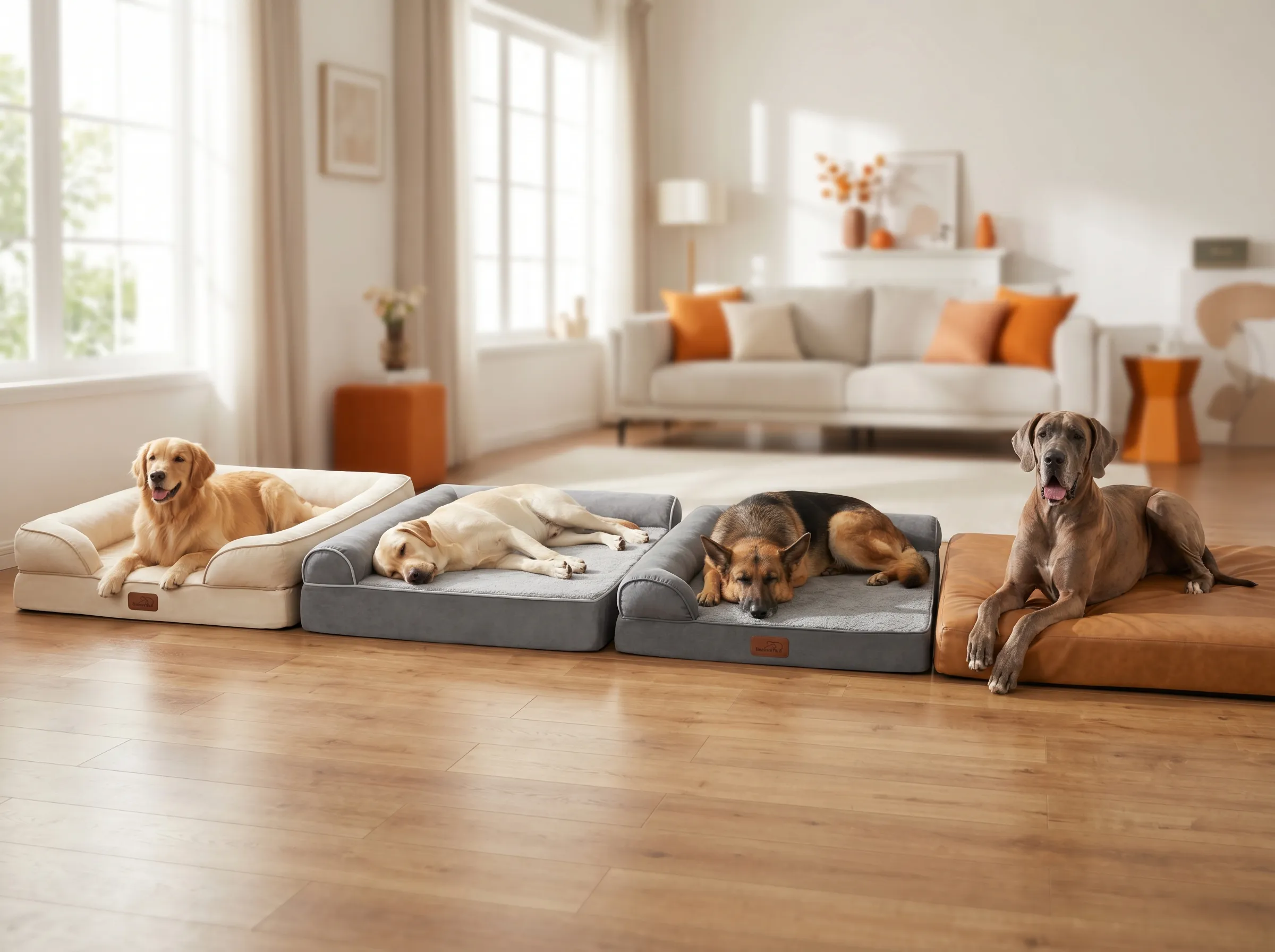
1. Veehoo 52-inch Memory Foam Bed — for very large sprawlers
The Veehoo model is a large memory-foam bed with a listed 52 × 36-inch footprint, a multi-layer base, a waterproof inner liner, and a removable cover. Its size is the main reason to consider it: a dog that sleeps fully stretched out needs more than a compact sofa-style cushion.
Why it may fit
- The long, wide surface can suit a large dog that changes position or sprawls.
- A waterproof inner layer is practical for accidents and damp cleaning routines.
- A nonslip bottom can help, although the floor underneath still matters.
Limits
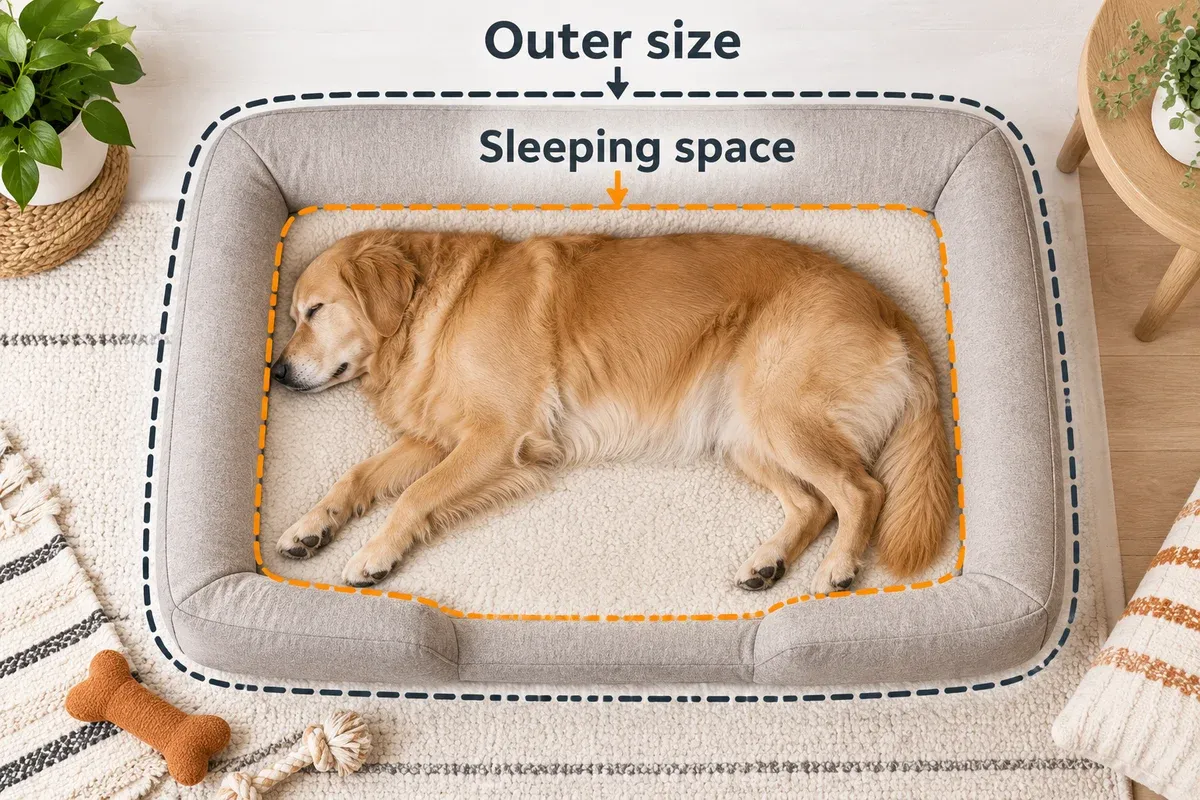
- The outside dimensions are not the same as the usable sleeping area; bolsters and seams reduce the space.
- A thick memory-foam bed can be heavy to move and may be difficult for a dog with a very low step tolerance.
- The listed weight capacity is not a substitute for checking the dog’s lying footprint and the foam’s feel under that dog.
2. Bedsure SupportMax XL Plus 48-inch — for a large bed with bolsters
This sofa-style design is listed with a 48 × 35-inch footprint, a thick padded base, three bolsters, a lowered front entry, a removable cover, and a nonskid bottom. It is most useful when the dog likes a headrest but still needs a broad base.
Why it may fit
- Bolsters can give a head-resting dog a defined edge.
- The lowered front is easier to approach than a high-sided cushion.
- A removable cover and water-resistant or waterproof layers can simplify routine cleaning; verify the current model’s care directions.
Limits
- Bolsters reduce the space available for a dog that sleeps stretched across the full outer footprint.
- A plush surface may hold heat or dry slowly after washing.
- “Extra thick” does not tell you the actual foam density or how the bed feels for a particular weight distribution.
3. Bedsure SupportMax XL 42-inch — for a large dog that needs a lower front
The 42-inch version is listed with a 42 × 30-inch footprint, a shredded-foam base, three bolsters, a lowered entry, a washable cover, and a nonskid bottom. It can be a practical middle size for a large dog that likes a sofa shape but does not need an extra-wide XXL surface.
Why it may fit
- Shredded fill can feel softer and more nestable than a solid foam slab.
- The lower entry reduces the height of the first step.
- A removable cover is useful when senior-dog accidents or muddy paws are part of daily life.
Limits
- Shredded foam can shift or compress differently from solid memory foam.
- The 42-inch outside length may be short for a giant breed or a dog that sleeps fully extended.
- A nonskid bottom works best on a clean, dry surface; it cannot prevent every slide on smooth flooring.
4. NOAH & PAW Giant Bed XXL — for a very broad sleeping area
This XXL model is listed at 55 × 45 inches with a layered foam base, a raised bolster, cooling-gel material, removable covers, and a waterproof liner. It is the most space-intensive option here and suits a dog that needs room to turn, stretch, or share the surface with a companion only when the manufacturer’s fit guidance allows it.
Why it may fit
- The wide footprint is useful for giant breeds and dogs that do not curl tightly.
- A layered surface and washable covers can make the bed easier to manage in a busy household.
- A waterproof liner helps protect the interior from accidents.
Limits
- The footprint needs a dedicated, level space and is not easy to move.
- Cooling material is not a guarantee that the dog will remain cool in a warm room.
- A tall bolster can be a barrier for a dog with weak hips or shoulders, so check the entry height in the selected model.
How to choose the right bed
Measure the dog, not just the breed
Measure from nose to the base of the tail while the dog is lying in its preferred stretched position. Measure the widest body point and add room for turning. Compare those measurements with the usable interior, not the outside edge of the bed. If the dog curls, sprawls, or changes position through the night, choose for the largest comfortable position.
The two outlines below distinguish the room the bed occupies from the surface your dog can actually lie on.
Check entry height and stability
A dog with joint pain may struggle with a high edge even when the sleeping surface is comfortable. Look for a lowered entrance and place the bed where the dog does not need to step over clutter. A nonskid underside helps, but a thin nonslip runner underneath may still be useful on tile or hardwood.
Compare the construction honestly
- Solid memory foam: can provide a consistent surface, but firmness and density matter and are not always published.
- Shredded foam: can be nestable and easier to reshape, but may shift or compress.
- Bolsters: give a headrest and a sense of enclosure, but reduce usable floor area.
- Cooling fabric or gel: may change surface feel, but room temperature, coat, and airflow still determine comfort.
- Waterproof liner and washable cover: matter for hygiene, but follow drying and heat instructions so the foam is not trapped damp.
There is no universal rule that a dog over a certain weight needs a particular number of inches. Foam thickness alone cannot reveal support, density, edge access, or durability.
Place the bed where the dog will use it
Give the dog a quiet, draft-free option with a clear path to water and the rest of the home. Some dogs prefer a cool floor during the day and a padded bed at night. Offering both is reasonable. Do not force an uncomfortable dog to remain on a new bed.
How to judge the fit at home
Watch the dog use the bed rather than judging it by the product name. Useful signs are that the dog can approach without hesitation, lie down without hanging over the edge, change position, and stand up without the bed sliding or the bolster blocking the exit. The surface should stay reasonably level after the dog has settled, and the cover should be removable without leaving the foam damp for long periods.
If the dog avoids the bed, pants more while resting, repeatedly slips when rising, or cannot step over the entry, change the placement or configuration instead of assuming the dog needs to “get used to” discomfort. A familiar blanket can make a new surface less strange, but never force a painful dog onto it. Recheck the fit after weight, coat, mobility, or sleeping habits change.
A bed is one part of mobility support
Veterinary care matters when a dog shows pain, reduced activity, reluctance to jump, slipping, muscle loss, or a change in sleep. A bed can make rest easier, but it should not be presented as a cure or a measurable treatment outcome. Depending on the diagnosis, a veterinarian may discuss weight management, controlled exercise, pain relief, rehabilitation, ramps, nail and floor traction, or other changes.
Keep the bed dry, inspect seams and foam, wash the cover as directed, and replace the bed when it stays compressed, develops a trip edge, or no longer provides a stable surface. A product’s warranty or marketing label does not replace inspection.
For a senior dog that needs rest breaks away from home, compare dog strollers and wagons by cabin fit, entry, and handling. A household bed may be too bulky for a transport cabin: measure the supported floor, keep the entrance clear, and check headroom above the permitted mat or liner.
Frequently Asked Questions
Does memory foam heal arthritis?
No. Memory foam may improve resting comfort or reduce pressure on hard flooring for some dogs. It does not repair a joint or treat the cause of arthritis.
How thick should a large-dog bed be?
There is no evidence-based thickness rule that fits every dog. Choose a bed that remains supportive under the dog, has enough usable surface, and can be entered safely. The dog’s response and veterinary advice matter more than a headline number.
Should an orthopedic bed be firm or soft?
The right feel depends on the dog’s weight, mobility, sleeping style, and preference. A surface that is too soft can make rising difficult; one that is too hard may not provide enough cushioning. Test the dog’s ability to lie down and stand up without slipping.
Can a bed replace a ramp?
No. A bed addresses resting comfort. A ramp addresses access to a couch, car, or other height. Use the solution that matches the movement problem and ask a veterinarian if the dog is avoiding normal activities.
Bottom line
Choose an orthopedic dog bed for usable space, stable support, accessible entry, traction, and cleanability—not for promises of healing or guaranteed mobility improvement. Large dogs often need more floor area than a product’s outer size suggests. Measure the sleeping position, observe how the dog gets up, and involve your veterinarian when pain or mobility changes are present.
Affiliate Disclosure: We earn from qualifying purchases through Amazon Associates at no extra cost to you.