

 Published sources
 Product details checked
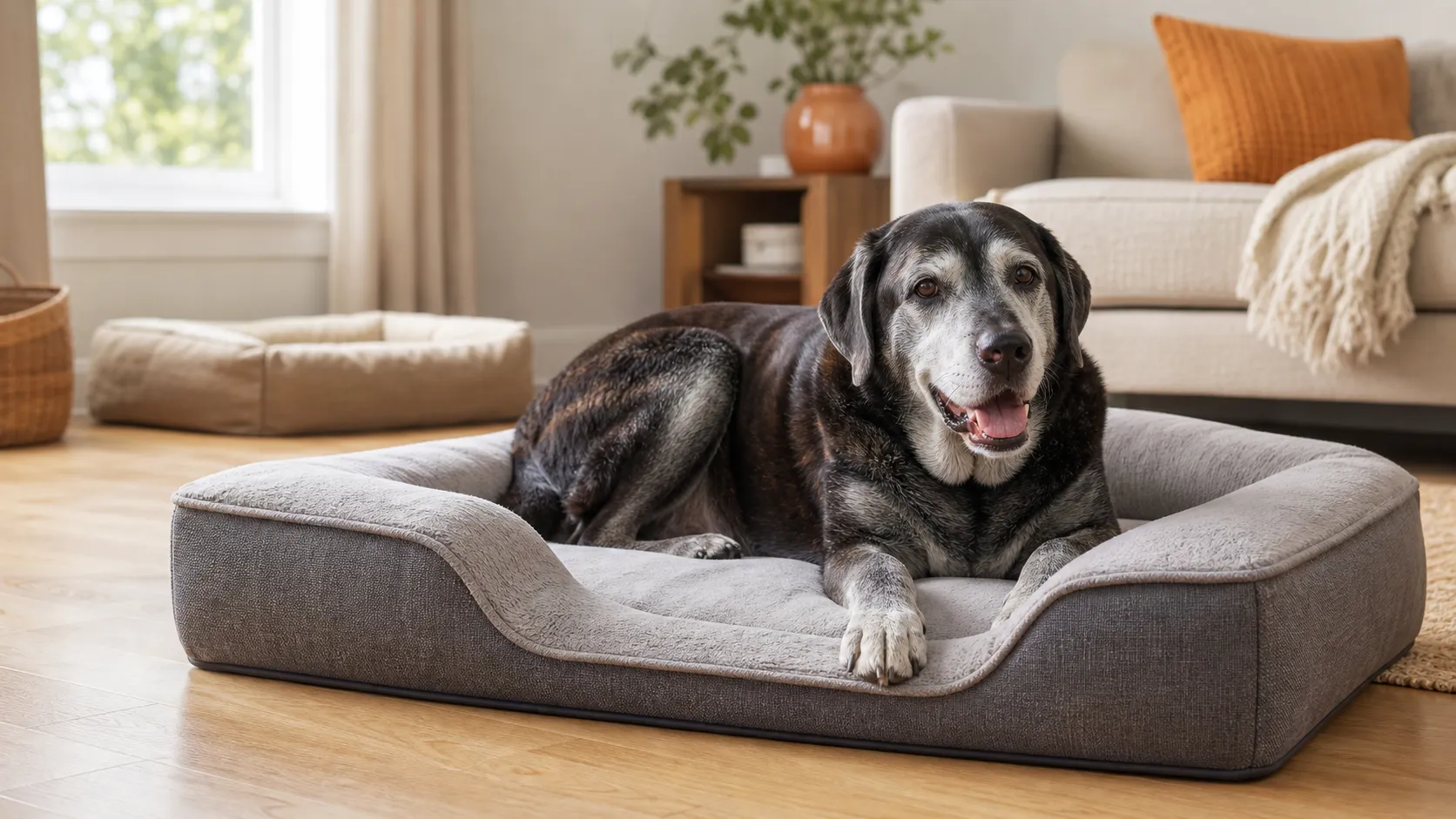
An arthritic dog does not need a bed that merely looks plush. The useful bed is supportive without feeling hard, easy to step into, stable on the floor, and simple to keep clean when an older dog has an accident. It also has to be the right size: a thick bed that leaves a Labrador’s hips hanging over the edge is not a supportive bed in practice.
The JOYELF Large Memory Foam Dog Bed is the better fit when you specifically want a solid memory-foam base and full bolsters. None of these beds treats arthritis or replaces veterinary pain management; they are environmental support that can make resting and getting up easier.
Health note: Arthritis is painful and progressive. If your dog is newly stiff, limping, reluctant to rise, or suddenly avoiding stairs or the car, arrange a veterinary examination. A bed can improve the environment, but it cannot diagnose the cause or control joint inflammation.
Quick Comparison: Dog Beds for Arthritis
-
Bedsure SupportMax™ XL Orthopedic Dog Bed (42")
Bedsure
A 42 x 30 x 9.5-inch sofa-style bed with shredded foam, an extra-padded base, three bolsters, a lowered front entry, a removable washable cover, and a nonskid bottom.
- 9.5" described overall height
- Shredded foam plus extra-padded base
- Three supportive bolsters
- Best for
- Large dogs that need a low-entry sofa shape and a broad padded base
- Size
- 42"L x 30"W x 9.5"Th
-
JOYELF Large Memory Foam Dog Bed
JOYELF
A sofa-style bed with a solid memory-foam base, full bolsters, an internal water-resistant cover, removable washable outer cover, and nonslip rubber backing.
- Solid memory-foam base
- Full bolster support for head and neck
- Internal water-resistant cover
- Best for
- Medium dogs that prefer a solid memory-foam base and surrounding bolsters
- Size
- 35.83"L x 26.77"W x 7.87"Th
-
Bedsure Orthopedic Dog Bed (35" Classic Sofa)
Bedsure
A classic 35 x 25 x 6.5-inch sofa bed with four-sided bolsters, a foam base, waterproof lining, removable washable cover, and nonskid bottom.
- 35"L x 25"W x 6.5"Th product information size
- Four-sided bolster support
- Waterproof lining
- Best for
- Small and medium dogs that need a low-cost, easy-entry bed
- Size
- 35"L x 25"W x 6.5"Th
-
KOPEKS 5.5-Inch Orthopedic Memory Foam Dog Bed
KOPEKS
Product selected for the stated use case; confirm fit with the manufacturer's specifications.
- 5.5" foam thickness claimed in the product documentation title
- 8" total described product height
- High-grade memory foam
- Best for
- Owners who want a firmer memory-foam feel and a separate waterproof liner
- Size
- 35"L x 28"W x 8"Th
-
Song Puppy Waterproof Orthopedic Memory Foam Dog Bed (42")
Song Puppy
A 42 x 30 x 9-inch sofa-style bed described with memory foam, a waterproof removable cover, washable construction, a nonskid bottom, and bolsters.
- 42"L x 30"W x 9"Th product information size
- Waterproof removable cover
- Nonskid bottom
- Best for
- Budget-conscious owners who need an XL-sized washable bed
- Size
- 42"L x 30"W x 9"Th
Review the linked product page before purchasing.
The 5 Best Dog Beds for Arthritis in 2026
1. Bedsure SupportMax XL 42-inch – Best Overall Value for Large Dogs
Check current price on Amazon →Best for: Large dogs that need extra cushioning and an easier front entry described dimensions: 42”L × 30”W × 9.5”Th
Why We Recommend It
The SupportMax is the most practical starting point for a larger senior dog on a budget. That combination matters more than a “premium” label: the dog gets a stable place to lie down, while the low front does not force an elderly dog to climb over a tall wall.
The 42-inch footprint is a good match for many Labs, Goldens, and similar dogs that curl or sleep in a compact position. Measure first if your dog sleeps fully stretched out. The outer dimensions are not the same as the usable sleeping surface, because the bolsters take up space.
Key Features
- Shredded foam with an extra-padded base: Gives more cushioning than a thin polyester-filled mat, although it will not feel like a single slab of memory foam.
- Lowered front entry: Reduces the step-over height for dogs that are stiff in the hips, knees, or elbows.
- Three bolsters: Gives a dog that likes to lean a place to rest its head without surrounding the whole entry with a high wall.
- Removable washable cover: More practical than a bed that can only be spot-cleaned.
- Nonskid bottom: Helps reduce sliding on smooth floors when a dog stands up.
Pros & Cons
Pros:
-
Strong combination of size, entry design, and price
-
Extra-padded base is useful for larger dogs that bottom out thin beds
-
Lower front is friendlier to dogs with limited mobility
-
Bolsters support head-resters without blocking the entrance
Cons:
- A 42-inch outer length can be too short for a giant breed or a long-bodied sprawler
- Shredded foam does not give the same contouring feel as solid memory foam
- Cover and fill need careful drying and re-fluffing after washing
Bottom line: Choose this one when you want the most arthritis-friendly features for the money and your dog fits the usable sleeping area. For a dog that needs a very firm, contouring base, move to the JOYELF or KOPEKS instead.
2. JOYELF Large Memory Foam Dog Bed – Best Solid Memory Foam Option
Check current price on Amazon →Best for: Medium dogs and compact large dogs that prefer a solid foam base described dimensions: 35.83”L × 26.77”W × 7.87”Th
Why We Recommend It
The JOYELF is the clearest choice here if “memory foam” is your priority. Product documentation describes a solid memory-foam base rather than loose fill, with full bolsters around the sleeping area. That can suit a dog that likes to lean or curl and needs a stable surface when shifting position.
The important limitation is the size. The product family calls this version “Large,” but the described footprint is only about 36 by 27 inches before the bolsters reduce the interior. That can work for a medium dog or a compact 40–50-pound dog, but it is not a safe size assumption for a long Labrador, German Shepherd, or giant breed. Measure the dog while fully stretched out and compare that measurement with the interior space.
Key Features
- Solid memory-foam base: Contours more predictably than loose fiber filling and resists the hammock-like feel of very soft beds.
- Full surrounding bolsters: Helpful for dogs that sleep with their neck or shoulders against an edge.
- Internal water-resistant cover: Adds a layer of protection between an accident and the foam.
- Washable outer cover: Lets you clean the surface without putting the foam itself in the machine.
- Nonslip rubber backing: Helps the bed stay put on hardwood or tile.
Pros & Cons
Pros:
- Solid foam is a better fit for dogs that dislike loose or lumpy filling
- Full bolsters create a secure sofa-like resting position
- Internal cover and removable outer cover are useful for senior-dog accidents
- Moderate price for a memory-foam design
Cons:
- The selected 35.83 × 26.77-inch footprint is not suitable for every “large” dog
- Full bolsters reduce the space available for stretching out
- Follow the cover’s drying instructions; heat and damp foam are a poor combination
Bottom line: This is the best match when your dog fits the compact dimensions and genuinely benefits from a firmer, solid-foam feel. Do not buy it on the word “Large” alone—buy it by the usable interior measurement.
3. Bedsure Classic 35-inch Sofa Bed – Best Budget Pick for Small Dogs
Check current price on Amazon →Best for: Small and medium dogs that need an easy-entry, washable bed described dimensions: 35”L × 25”W × 6.5”Th
Why We Recommend It
The classic Bedsure is the sensible low-cost choice for a smaller arthritic dog.
This is also the product most likely to be mis-sized by a buyer. the product documentation title speaks broadly about large dogs, but the 35 × 25-inch models reviewed here is not a large-breed bed. Treat the product title as a family name, not a sizing recommendation. Select the models only after measuring the dog’s full sleeping length and the interior floor.
Key Features
- Four-sided bolsters: Gives small dogs a supported place to rest their head and body.
- Waterproof lining: A practical safeguard for dogs with occasional incontinence.
- Removable washable cover: Makes regular cleaning affordable and realistic.
- Nonskid bottom: Reduces the chance of the bed moving as the dog gets up.
- 6.5-inch described thickness: More substantial than a flat blanket, while still low enough for many smaller dogs to access.
Pros & Cons
Pros:
- Lowest-risk budget option for a small dog that needs basic support
- Waterproof lining and washable cover address everyday senior-dog messes
- Four sides give curlers and head-resters a secure edge
- Nonskid backing is helpful on hard floors
Cons:
- The 35-inch version is too small for most large breeds
- The bolsters reduce the usable sleeping area
- Foam firmness and dimensions can vary between size models
Bottom line: Pick this version for a smaller dog, not because the title says “large.” If the dog’s body is longer than the interior floor, step up to a larger models or choose the SupportMax.
4. KOPEKS 5.5-Inch Memory Foam Bed – Best for a Separate Waterproof Liner
Check current price on Amazon →Best for: Owners who want a firmer memory-foam feel plus a separate liner described dimensions: 35”L × 28”W × 8”Th
Why We Recommend It
KOPEKS makes sense for a very specific buyer: someone who wants memory foam, a pillow-style edge, and a separate waterproof liner rather than only a water-resistant outer cover.
It is a focused option for a dog that likes a firmer mattress and for an owner willing to manage an additional liner. The displayed 35 × 28-inch models is also not a giant-breed bed.
Key Features
- 5.5-inch foam claim: Product documentation describes a high-grade memory-foam layer for cushioning and support.
- Separate waterproof liner: Adds a replaceable barrier between accidents and the foam.
- Pillow-style bolster: Gives the dog a raised place to rest its head.
- Removable washable cover: Keeps routine cleaning manageable.
- Anti-slip bottom: Helps keep the bed stable on smooth flooring.
Pros & Cons
Pros:
- Memory-foam construction is clearly stated in the product information
- Separate liner is valuable for older dogs with accidents
- Washable cover and nonskid base cover the practical essentials
- Good option when a dog prefers a firmer pillow-style bed
Cons:
- A raised pillow can be harder to step over for dogs with severe mobility loss
5. Song Puppy 42-inch Memory Foam Bed – Best Low-Cost XL Option
Check current price on Amazon →Best for: Budget-conscious owners who need a larger washable surface described dimensions: 42”L × 30”W × 9”Th
Why We Recommend It
The Song Puppy is the economical way to get a 42-inch sofa-style bed with a washable waterproof cover, nonskid bottom, and a memory-foam construction.
The trade-off is confidence, not just price.
Key Features
-
42 × 30-inch described footprint: Gives medium and some large dogs more room to turn and stretch.
-
Waterproof removable cover: Useful for routine cleaning and occasional accidents.
-
Nonskid bottom: Helps prevent the bed from drifting across hard floors.
-
Bolster sofa design: Gives dogs a supportive edge without requiring a separate pillow.
Pros & Cons
Pros:
- Lowest-cost larger bed in this comparison
- 42-inch footprint is more useful for medium and large dogs than the 35-inch picks
- Waterproof washable cover and nonskid base are practical arthritis-home features
Cons:
- A 42 × 30-inch bed can still be short for a large sprawler
Bottom line: This is a reasonable budget experiment when size matters more than premium materials.
What Makes a Dog Bed Arthritis-Friendly?
The word “orthopedic” is not a regulated guarantee that a bed will improve arthritis. Look at the construction instead.
1. Support that does not bottom out
Press the bed with your hand and look for a base that rebounds without collapsing straight to the floor. A heavier dog needs enough supportive material under the hips and shoulders; a thick bolster alone does not count. Solid memory foam, dense support foam, or a well-built layered base can all work. Thickness is useful, but thickness without adequate density is mostly marketing.
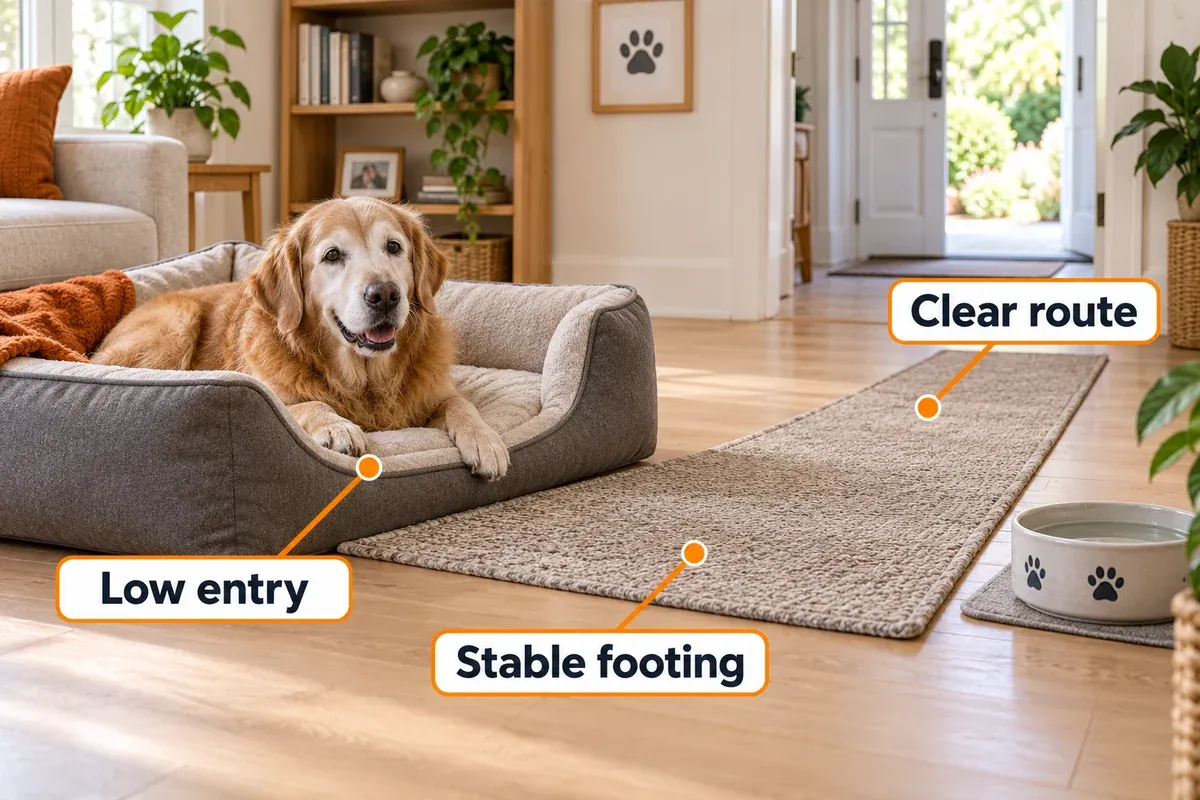
2. A low, easy entry
Dogs with arthritis often struggle more with getting up and stepping over an edge than with lying down. A lowered front entry is useful. If your dog has severe mobility loss, a recessed mattress or very low-profile bed can be safer than a tall sofa bed. Watch the dog use it before leaving them unsupervised.
3. A stable bottom
A dog that slips while standing can lose confidence in the entire room. Choose a nonskid base and put the bed on a nonslip runner if the floor is polished wood, tile, or vinyl. The Cornell University College of Veterinary Medicine’s osteoarthritis guidance specifically includes nonslip rugs and ramps among home changes that can support mobility.
4. A washable cover and moisture barrier
Older dogs may have accidents because pain, weakness, or reduced mobility makes reaching the door harder. A removable cover is the minimum; a water-resistant or waterproof liner protects the foam. Follow the manufacturer’s washing and drying instructions rather than putting memory foam or a full bed in a washing machine.
5. Enough usable sleeping space
Measure your dog from nose to the base of the tail while standing, then measure again while fully stretched out. Add room for the dog’s preferred position. For bolster beds, measure the interior floor—not just the outer length shown in the title. If your dog sleeps with legs extended, size up.
How to Choose the Right Size and Foam
There is no universal “seven-inch rule” that fits every dog. Use the following as a shopping starting point, then compare the manufacturer’s weight guidance and the actual inner dimensions:
| Dog and sleep style | What to prioritize | Common mistake |
|---|---|---|
| Small dog or tight curler | Supportive foam, low entry, washable cover | Buying a giant bed with a high step-over edge |
| Medium dog or side sleeper | A stable foam base and enough interior length | Measuring the outer bed instead of the sleep surface |
| Large dog or sprawler | Dense base, wide footprint, nonskid bottom | Choosing a thick bolster with a thin mattress |
Memory foam vs. egg-crate or shredded foam: Memory foam can contour closely and feel stable, but some dogs dislike its slower response when they reposition. Egg-crate foam can feel cooler and easier to move on, while shredded foam can offer a softer sofa feel but may shift over time. The best choice is the one that supports the dog without making it difficult to stand up.
Cooling features: A cooling surface is useful for dogs that overheat, but it is not an arthritis treatment. Prioritize supportive foam and easy access first. A bed that traps heat can make a dog restless; keep it away from radiators and allow the dog to choose a cooler floor when appropriate.
Set Up the Rest of the Room, Too
A good bed works better as part of a safer route through the home. The VCA’s arthritis guidance recommends soft, padded bedding, nonskid surfaces, and ramps or steps for access to vehicles and furniture. The American College of Veterinary Surgeons also describes weight control, controlled low-impact activity, rehabilitation, and veterinary pain management as part of a broader osteoarthritis plan.
- Put a nonslip runner between the bed and the door, food bowl, and water bowl.
- Keep the bed on the floor your dog already chooses instead of hiding it in a quiet room they rarely visit.
- Use a ramp or step for a couch, car, or high bed rather than asking an arthritic dog to jump.
- Keep nails short and trim excess fur between paw pads if your veterinarian agrees; traction starts at the feet.
- Place a spare washable blanket over the cover during recovery from an accident, but do not let loose fabric bunch up under the dog’s hips.
- Keep the dog lean according to veterinary guidance. A supportive bed cannot offset extra load on painful joints.
Beds and Features I Would Skip
- Flat polyester stuffing for a heavy dog: It can compress quickly and leave hips close to the floor.
- A tall wall with no low entry: A thick bed is not useful if the dog has to climb over it.
- A slippery cover or base: Soft fabric does not compensate for a bed that moves when the dog stands.
- A bed that is too small: Hanging hips and shoulders defeat the point of support.
- “Orthopedic” claims without construction details: Look for foam type, usable dimensions, cover, liner, and care instructions.
- Any bed described as indestructible: No soft bed is chew-proof. A dog that destroys bedding may need a different material and a supervised setup.
Frequently Asked Questions
Can a dog bed cure arthritis?
No. A bed can provide cushioning, warmth, and a stable resting surface, but it does not repair cartilage or replace diagnosis and pain control. Arthritis is managed with an individual veterinary plan that may include weight management, controlled exercise, rehabilitation, and medication.
Is memory foam always best for an arthritic dog?
No. Memory foam is one useful construction, not a medical requirement. Some dogs prefer a slightly springier egg-crate or layered foam bed because it is easier to push up from. Watch whether your dog can lie down, turn, and stand without struggling.
How thick should an arthritis dog bed be?
There is no safe thickness number for every dog. Choose enough supportive material that the hips do not bottom out, then balance it against entry height. A very thick bed with a tall wall can be worse for a dog that cannot step over it. Use the manufacturer’s weight guidance and measure the dog’s usable sleeping area.
Should an arthritic dog use an elevated bed?
An elevated cot can improve airflow and keep a dog off a cold floor, but it is not automatically arthritis-friendly. The surface must be stable, the dog must be able to step onto it safely, and the fabric must not sag under the dog’s weight. For severe mobility loss, a low floor bed is often simpler.
My dog refuses the new bed. What should I do?
Put the bed where the dog already rests, add a familiar blanket, and let the dog investigate without pressure. Avoid moving it between rooms during the first few days. If the dog repeatedly avoids it, check for heat, a strong packaging smell, slippery fabric, an unstable base, or an entry that is too high.
When should stiffness lead to a vet visit?
Arrange a veterinary examination for new or worsening stiffness, limping, reluctance to rise, reduced activity, pain when touched, or difficulty with stairs. Sudden inability to stand, severe pain, collapse, or a rapidly worsening gait needs urgent care. Do not give human pain medication unless a veterinarian has specifically prescribed it for your dog.
If a vet visit is planned and you need a US budgeting range, use our vet cost calculator; it is not a diagnosis or a replacement for the clinic’s estimate.
Final Verdict
For most large dogs with mild-to-moderate mobility changes, the Bedsure SupportMax XL 42-inch is the most balanced current pick: useful size, lowered entry, extra-padded base, washable cover, nonskid bottom, and a price that leaves room in the budget for a nonslip runner or ramp. Choose the JOYELF when a solid memory-foam base matters more than a wide footprint.
Before ordering, measure the dog’s full sleeping length, confirm the usable interior, and verify the exact model information. Then treat the bed as one part of arthritis care—not as a substitute for a veterinary plan.
Check current price on Amazon →Related Dog-Care Guides
- Best Orthopedic Dog Beds 2026 — a broader comparison of large and senior-dog bed constructions
- Best Dog Ramps for Large Dogs 2026 — joint-friendly access to cars, couches, and beds