

 Published sources
 Product details checked
A smelly litter box isn’t just unpleasant—it’s a sign that odor-causing bacteria are thriving. Whether you have one cat or five, the problem is the same: cat waste produces ammonia that gets worse with moisture and time.
Quick Answer: The single fastest way to eliminate litter box smell is POOPH LITTERIZER, a fragrance-free powder that absorbs 46x its weight in moisture and odor. Combined with daily scooping and the right litter box choice, it transforms even multi-cat households from stinky to fresh within days. However, the most effective approach combines multiple strategies—not just relying on one product or method.
This guide brings together owner-reported problems, published veterinary guidance on odor control, and product-label information. The methods are ordered from simple daily changes to targeted product options so you can start with the quickest wins.
In this guide, you’ll discover:
- The #1 fastest odor-elimination product (and why it works)
- 10 additional methods that eliminate smell without chemicals
- How to choose litter that reduces odor naturally
- When to upgrade to a self-cleaning box (and when it’s not needed)
- Budget vs premium odor solutions
- Common mistakes that cause litter box stink
Method 1: POOPH LITTERIZER – The Fastest Chemical-Free Solution
Check current price on Amazon →Best For: All litter types, multi-cat households, sensitive cats Coverage: 4-6 months per 16oz bottle for single cat
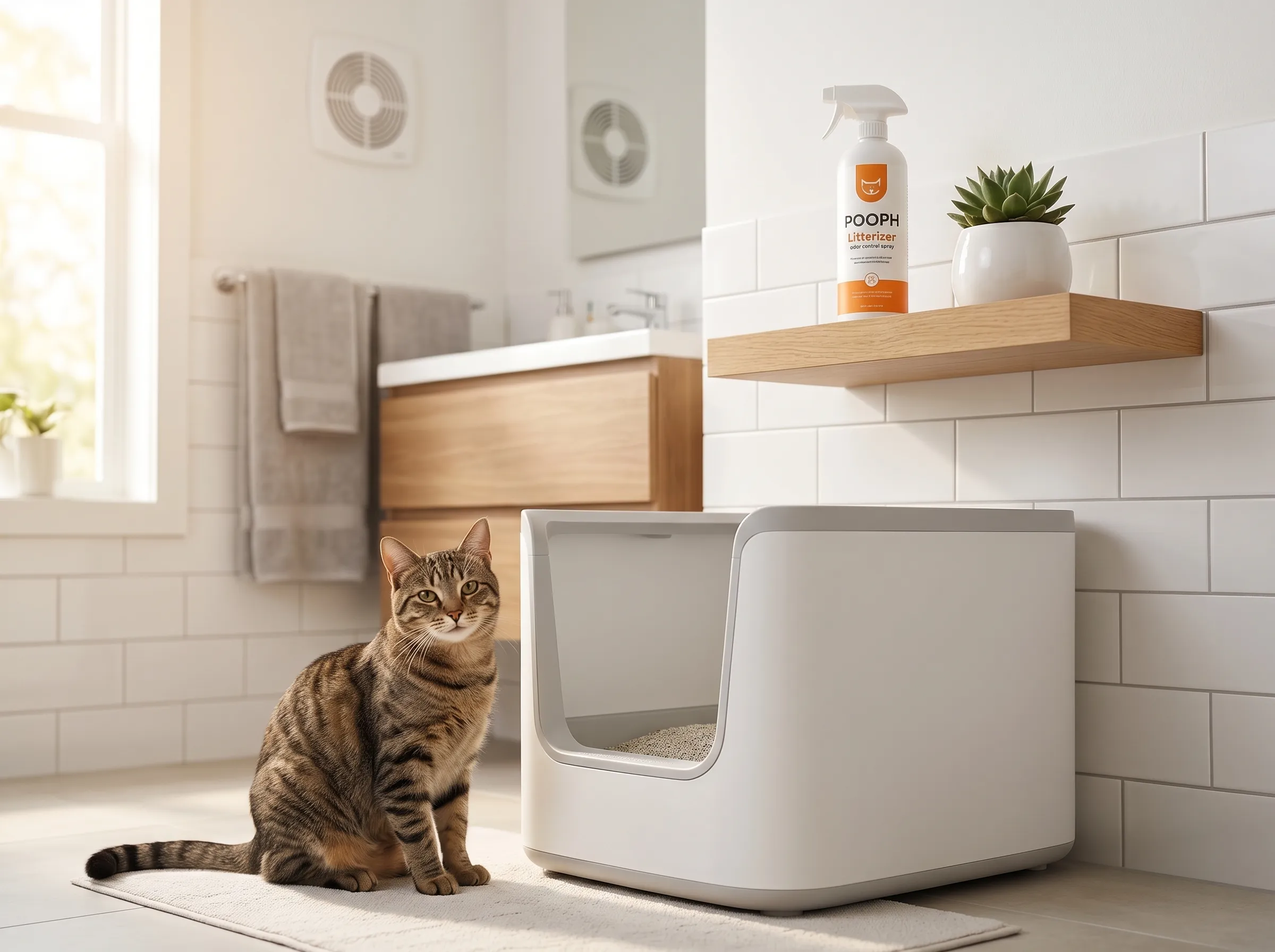
If you want a product to try first, POOPH LITTERIZER is a fragrance-free powder that the product description says uses natural minerals to absorb wetness and odor. Follow the label and stop if your cat reacts to the product.
Why it works: Unlike spray deodorizers that mask smell, POOPH actively absorbs moisture. Cat urine contains urea and ammonia—POOPH’s mineral formula binds these compounds, preventing the chemical breakdown that creates stench. The result? Fresh litter within hours, not days.
How to use it:
- Sprinkle a thin layer over fresh litter (don’t overdo it—light application is key)
- Apply again each time you add fresh litter
- One 16oz bottle lasts 4-6 months for a single cat
Pros & Cons
Pros:
-
Works with any litter type (clay, crystal, pine, pellets)
-
Fragrance-free—won’t upset sensitive cats
-
No chemicals or artificial additives
-
One bottle costs less than a week of enzyme sprays
Cons:
- Requires regular reapplication (not a one-time fix)
- Light hand needed—too much powder can reduce clumping
- Takes 2-3 days to fully eliminate old odor buildup
- Some cats may avoid powder-coated litter initially
Bottom Line: If you’re dealing with persistent smell despite daily scooping, POOPH is the fastest investment you can make. It’s not a replacement for good habits, but it’s the best supplement to them.
Method 2: Choose the Right Litter Box (Or Upgrade to Automatic)
The litter box itself matters more than most owners realize. A cramped, closed box traps odor. A spacious, vented box lets ammonia escape.
What to look for:
- Open-top or high-sided designs allow better air circulation and easier scooping
- Larger dimensions (minimum 22” length for one cat)
- Low sides or entry for better ventilation
- Non-porous surfaces that don’t absorb odor into the material
If you have large cats (Maine Coons, Ragdolls) or multiple cats, consider upgrading to an automatic litter box. Self-cleaning models remove waste within minutes of elimination, preventing odor buildup.
Related reading: Best Self-Cleaning Litter Boxes for Large Cats 2026 compares models like the PETLIBRO Luma and Litter-Robot 4, which use active odor control and ventilation systems.
Method 3: Daily Scooping (The Non-Negotiable Habit)
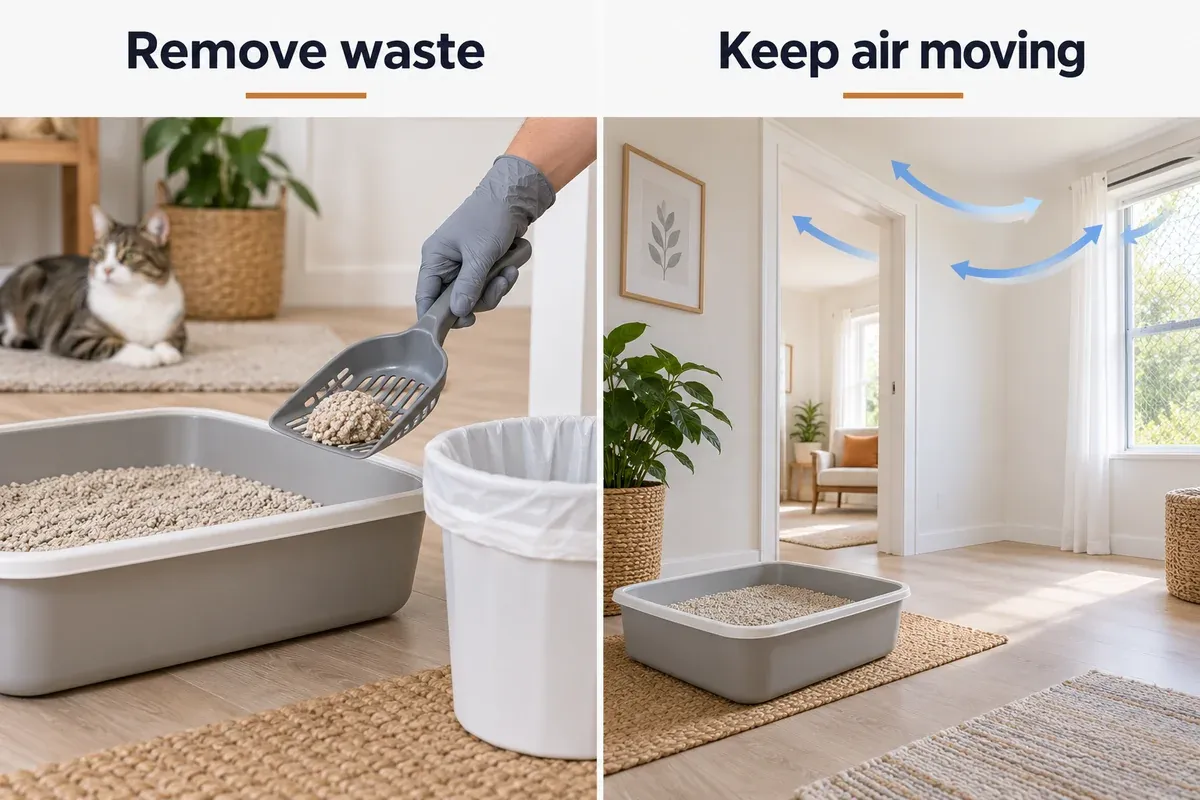
You can’t deodorize your way around daily scooping. Clumped urine left in the box decomposes and produces ammonia gas—the main culprit behind litter stink.
Daily routine:
- Scoop clumps at least once daily (preferably morning and night for multi-cat homes)
- Remove all solid waste immediately
- Add fresh litter to replace what you’ve scooped
- Do a full litter change every 1-2 weeks
Pro tip: Scoop before applying deodorizer powder. Apply POOPH to fresh litter only—it’s wasted on used litter mixed with waste.
Method 4: Select Low-Odor Litter Types
Not all litters are created equal. Some trap odor; others neutralize it naturally.
Best litters for odor control:
- Crystal litter (silica gel): Absorbs 40x its weight in moisture. Eliminates ammonia before it becomes airborne. ( per 40lb bag)
- Pine or cedar pellets: Natural oils neutralize odor. Good for allergic cats. ( per bag)
- Coconut husk litter: Sustainable and highly absorbent. Less dust than clay. ( per bag)
- Enzyme-treated clay litter: Clay with added enzymes that break down ammonia compounds. ( per bag)
Avoid:
- Standard clay litter (high dust, poor absorption)
- Scented litters (mask smell, irritate sensitive cats)
- Paper-based litters (absorb slowly, less odor control)
For a litter-only comparison, Tuft & Paw’s OdorStop formula is a mixed tofu pellet option marketed for odor control and lower tracking. Change only the litter, keep the box and scooping routine stable, and judge the result over normal use rather than relying on the product claim alone.
View OdorStop at Tuft & Paw →Method 5: Improve Ventilation Around the Litter Box
Ammonia is a gas. Stagnant air = concentrated odor. Better airflow = fewer smells.
Ventilation tips:
- Place the box in a room with good air circulation (not a sealed basement corner)
- Use a small fan or air purifier 3-4 feet from the box
- Open windows when weather allows
- Ensure the litter room has at least one air vent or exhaust fan
Budget pick: A compact portable air purifier with an odor-absorbing filter can reduce smell in a small room.
Method 6: Deep Clean the Litter Box Weekly
Even with daily scooping, bacteria and odor-causing compounds build up on the box surface.
Weekly cleaning routine:
- Empty all litter into a trash bin
- Wash the box with unscented soap and warm water (not bleach—it reacts with ammonia)
- Rinse thoroughly and dry completely
- Refill with fresh litter
- Apply POOPH to the top layer
Monthly deep clean:
- Soak the box in hot water with baking soda (1 cup per gallon) for 15 minutes
- Scrub with a brush to remove odor-causing residue
- Rinse and dry completely before refilling
Method 7: Add Baking Soda (Budget Alternative)
If you don’t have POOPH on hand, baking soda is a surprisingly effective backup. It’s cheaper and works with all litter types.
How to use it:
- Sprinkle baking soda on the bottom of the clean litter box before adding litter
- Add a light layer between scooping sessions
- Cost: per month vs for POOPH
Caveat: Baking soda is less powerful than POOPH and can interfere with clumping if overused. It’s a budget stopgap, not a premium solution.
Method 8: Use Enzyme-Based Additives
Enzyme products break down the uric acid compounds that create ammonia smell. They’re different from deodorizers—they eliminate the source, not just mask it.
How they work:
- Sprinkle onto fresh litter or used clumps
- Enzymes break down uric acid molecules over 24-48 hours
- Smell gradually disappears as decomposition is prevented
Cost: Recurring replacement cost; one bottle typically lasts 1-2 months
Method 9: Replace the Litter Box Regularly
Over time, plastic absorbs odor molecules even after cleaning. After 1-2 years, a litter box might smell even when clean.
Replacement strategy:
- Replace the box every 18-24 months
- Upgrade to larger or better-designed boxes if your current one is too small
- Switch to stainless steel inserts (in some premium boxes) which don’t absorb odor
Method 10: Use Multiple Litter Boxes (Multi-Cat Homes)
The golden rule: Number of boxes = Number of cats + 1
A single box with multiple cats becomes overwhelmed. Urine sits longer, bacteria multiply, smell intensifies.
Multi-cat solution:
- 2 cats = 3 boxes (spread across different rooms if possible)
- 3 cats = 4 boxes
- Rotate boxes so one gets a weekly deep clean while others stay active
Pro tip: Cats are less likely to eliminate outside the box if they have a dedicated box. This alone prevents odor problems.
Method 11: Schedule Professional Litter Box Cleaning (If Needed)
Some cat owners with mobility issues or large numbers of cats use professional services:
- Local pet waste removal services: per weekly scoop
- Mobile litter box cleaning: Specialized services that deep-clean boxes on-site
When it’s worth it:
- You have 4+ cats
- You have mobility or health issues
- Your schedule is too demanding for daily scooping
Combining Methods for Maximum Odor Control
For a single cat: Daily scooping + POOPH + crystal litter = virtually no smell For 2-3 cats: Multiple boxes + automatic scooping + POOPH + enzyme powder For 4+ cats: Consider a self-cleaning box + additional manual boxes + daily maintenance
Frequently Asked Questions
Is POOPH safe for cats?
POOPH’s product description identifies it as fragrance-free and non-toxic. Follow the label, keep the container away from cats, and do not treat an odor-control product as a substitute for veterinary advice.
How long does POOPH last per bottle?
One 16oz bottle covers a single-cat box for 4-6 months with light, regular application. Multi-cat households go through bottles faster. Apply sparingly—about 1 teaspoon per box refresh.
Can I mix POOPH with baking soda?
Yes, both work through absorption, not chemical interaction. However, POOPH alone is more effective. Mixing is redundant and wastes both products.
Should I use scented deodorizers?
No. Scented products mask odor but irritate cats’ sensitive noses and can discourage box use. Fragrance-free solutions like POOPH are safer and more effective.
What’s the best litter for odor control?
Crystal litter absorbs the most moisture (40x its weight), making it the top choice for odor. Pine pellets work well for natural-preferring owners. Avoid clay litter—it traps smell and contains high dust levels.
How often should I deep-clean the litter box?
At minimum, once weekly. Multi-cat boxes benefit from twice-weekly deep cleaning. Monthly thorough scrubbing (with baking soda soak) eliminates odor buildup that regular washing misses.
Do automatic litter boxes eliminate smell better?
Self-cleaning boxes remove waste within minutes, preventing odor buildup. However, they still require regular maintenance. Automatic models work best with deodorizers, not as a replacement for odor control. See our comparison of top models here.
What causes litter box smell in the first place?
Cat urine contains uric acid and ammonia-producing bacteria. When urine sits in litter, bacteria break down urea into ammonia gas—the pungent smell. Moisture accelerates this process. Dry, well-ventilated boxes smell far less.
Can litter additives harm my cat’s paws?
Quality additives like POOPH are safe. However, some cats are sensitive to powder. If your cat avoids treated litter, apply deodorizer between litter changes, not on active litter. This reduces direct paw contact.
Final Verdict: Your Action Plan to Eliminate Litter Box Smell
Start today (Quick wins):
- Order POOPH LITTERIZER – works within hours
- Do a full litter box deep clean with baking soda
- Increase scooping to morning + night
This week (Foundation):
- Switch to crystal or enzyme-treated litter
- Add a second litter box if you have multiple cats
- Place a small fan 3-4 feet from the box for ventilation
This month (Long-term):
- Set a weekly deep-clean schedule
- Evaluate your litter box size (upgrade if needed)
- If smell persists, consider a self-cleaning box: See our guide to best models
Why this works: You’re attacking odor from three angles—removal (scooping), prevention (deodorizer), and environment (ventilation). Most owners rely on just one. That’s why they fail.
Recommended Products for Litter Box Odor Control
-
POOPH LITTERIZER Litter Box Deodorizer
POOPH
Powerful powder deodorizer that absorbs 46x its weight in wetness and odor. The fragrance-free mineral formula is designed for use with different litter types to help keep boxes dry and reduce odor.
- Absorbs 46x its weight in moisture and odor
- Fragrance-free formula - safe for sensitive cats
- Works with all litter types (clumping, crystal, pine, etc.)
- Best for
- Chemical-free odor elimination for all litter types
- Why it may fit
- Powerful powder deodorizer that absorbs 46x its weight in wetness and odor. The fragrance-free mineral formula is designed for use with different litter types to help keep boxes dry and reduce odor.
-
Tuft & Paw Really Great Litter - OdorStop
Tuft & Paw
A mixed tofu litter marketed with a triple-action odor-control blend, low-tracking pellets, and a 99% dust-free claim.
- Mixed tofu pellet format
- Manufacturer describes a triple-action OdorStop blend
- Designed for multi-cat odor and tracking control
- Best for
- A controlled litter-only odor and tracking trial
- Why it may fit
- A mixed tofu litter marketed with a triple-action odor-control blend, low-tracking pellets, and a 99% dust-free claim.
Review the linked product page before purchasing.