

 Published sources
 Product details checked
Start with the lowest temperature your site reaches, then check the available water connection and supply pressure. A float valve or metal finish alone won’t tell you whether a waterer suits your setup. Miller specifies above-freezing use for Little Giant’s DuraMate and lists a 4-gallon bowl, a 3/4-inch garden-hose connection, and a 20–50 psi operating range. The 88SW/88ESW manual lists horses as an intended use and calls for a 1/2-inch male NPT connection at 20–50 psi. It gives no freeze rating or service-life estimate.
Quick answer: The DuraMate suits a site that stays above freezing and has a compatible 3/4-inch garden hose. The 88SW or epoxy-coated 88ESW suits a fixed supply with 1/2-inch male NPT threads and pressure between 20 and 50 psi. For freezing conditions, choose a complete system with a stated low-temperature rating and matching installation instructions. Keep backup water available while you confirm it works at your site.
Quick comparison: start with temperature and plumbing
Manufacturer-documented float waterers
-
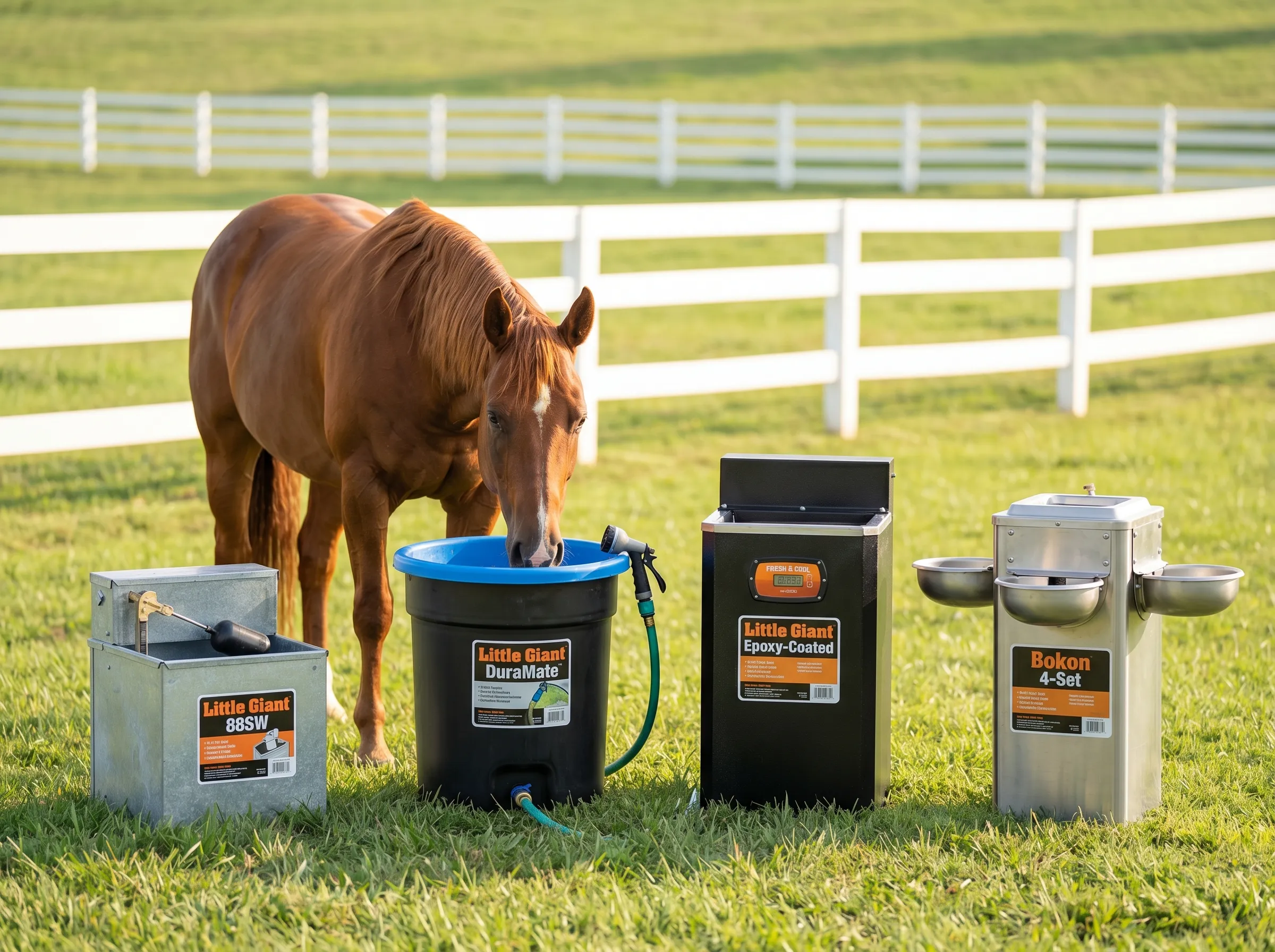
Little Giant DuraMate Float Controlled Automatic Waterer 4 Gallon
Little Giant
Miller specifies above-freezing use, a 4-gallon impact-resistant polyethylene bowl, float control, and a 20–50 psi range through a standard 3/4-inch garden hose. Mounting hardware is not included.
- 4-gallon bowl with float-controlled refill
- 3/4-inch garden hose; 20–50 psi operating range
- Specified for above-freezing temperatures; impact-resistant polyethylene
- Published fit
- Above-freezing sites with a 3/4-inch garden hose and a 20–50 psi supply
- Published feature
- 4-gallon float waterer for above-freezing temperatures
-
Little Giant 88SW All Purpose Automatic Stock Waterer
Little Giant
Miller's instructions list the 88SW for horses and specify galvanized steel, an adjustable float, and a 1/2-inch male NPT supply at 20–50 psi. The instructions do not state a freeze rating or expected service life.
- Manufacturer lists horse use and a galvanized steel bowl
- Adjustable float; 1/2-inch male NPT at 20–50 psi
- Must be mounted on a vertical surface and tested for shut-off
- Published fit
- Installations that match the 1/2-inch male NPT connection and 20–50 psi range
- Published feature
- Horse-use bowl with adjustable float and specified connection
The DuraMate is specified for above-freezing temperatures. The 88SW/88ESW instructions do not state a freeze rating or service life. Do not treat these standard float bowls as winter-protection systems.
The DuraMate product page from Miller Manufacturing lists a 4-gallon impact-resistant polyethylene bowl, float control, a 3/4-inch hose connection, and a 20–50 psi operating range. It specifies above-freezing use. Miller’s 88SW/88ESW installation instructions list a galvanized bowl, adjustable float, 1/2-inch male NPT connection, and both finishes. The manual provides no freeze rating, service-life estimate, or corrosion test for either model.
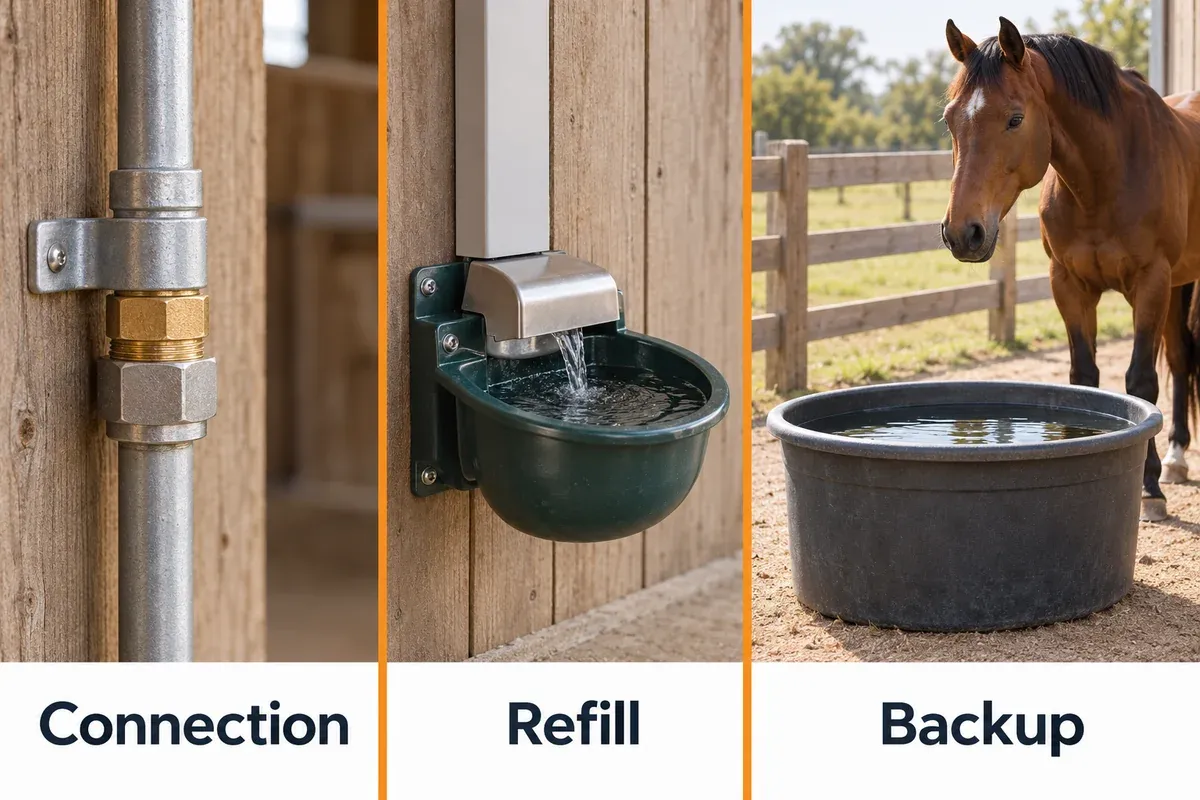
Use these three checks alongside the comparison table. A small bowl can refill repeatedly, but its capacity alone does not show whether the incoming supply will keep up.
Match bowl capacity to daily water demand
A 4-gallon bowl is not a horse’s full-day water supply. The University of Minnesota Extension says most 1,000-pound adult horses need at least 10–12 gallons of water a day in winter.
A float refills the bowl as the horse drinks, but the refill rate depends on the water supply and installation. Miller publishes the DuraMate’s pressure range, but not a gallons-per-minute refill rate. Measure pressure and flow at the bowl before buying. If several horses will share it, make sure the incoming supply can meet demand.
Water temperature affects how much a horse drinks, too. UMN Extension reports that ponies drank about 40% more when their water was above freezing in cold weather. It recommends checking winter water regularly and says snow and ice are not adequate substitutes. Plan water access around your horse’s size, workload, feed, and weather. Contact a veterinarian if its drinking habits change or you have a health concern.
Choose a model that fits your setup
Little Giant DuraMate: for above-freezing sites
The DuraMate suits a site with a standard 3/4-inch garden-hose connection where temperatures stay above freezing. Miller lists a 4-gallon capacity, a 20–50 psi operating range, impact-resistant polyethylene construction, a 30-inch hose with female fitting, and metal mounting brackets. Mounting hardware is not included.
Before buying, compare the measured pressure at the waterer with the published range and plan how to protect the hose and bowl from freezing. Miller does not publish a service-life estimate for this model.
Little Giant 88SW and 88ESW: fixed plumbing
Miller’s instructions list horses as an intended use for the 88SW and specify a 1/2-inch male NPT supply at 20–50 psi. The manual identifies the 88SW as galvanized steel and the 88ESW as epoxy-coated steel. It does not compare corrosion resistance or expected lifespan between the two finishes.
The instructions require mounting the bowl on a vertical surface and checking that it fills and shuts off correctly. An incorrectly adjusted float can keep water flowing. If your plumbing meets those specs, Check current price on Amazon → for the 88SW. Miller’s manual also lists the coated 88ESW. It gives no bowl capacity, freeze rating, or service-life estimate, and does not compare corrosion resistance.
Plan a complete winter setup
A bowl alone cannot tell you whether an automatic waterer will work in winter. The valve, supply line, heater, power source, and installation matter too. Check the complete system’s temperature limits and installation instructions. Neither Little Giant model above has a published freeze rating.
If power is available
Ritchie’s Classic Equine by Ritchie AutoFount listing describes an insulated chamber. For cold climates, it lists an optional immersion heater and self-regulating heat cable. The bowl holds 3.2 gallons; Ritchie rates the unit for up to 40 horses and lists a 10-year limited warranty for polyethylene waterers. Ritchie publishes no minimum operating temperature, so the listing does not establish how the unit performs in freezing conditions.
Follow the model’s installation guide. Have a qualified installer check that the heater, water line, and electrical supply suit local conditions. A generic tank de-icer or heat tape may not suit a small automatic bowl. For the 88SW, Miller warns that wrapping a garden hose with heat tape can soften it and cause leaks.
Water lines below the local frost line
Tru-Test Datamars says its Thermal Earth Tube is required when installing its automatic waterer. The tube runs under the waterer and concrete pad, extending below the local frost line. Datamars says heat from the ground circulates around the supply line while the tube insulates it from cold air.
The required depth depends on the frost line at your site. Follow Datamars’ installation instructions and confirm the design with a local installer.
If you are considering solar
A solar pump that drains a bowl after use works differently from a solar heater. A retailer’s 12-volt motion-controlled watering system uses a 160-watt panel, motion sensor, pump, and automatic drainback. Its battery box fits up to four batteries. The listing rates the system for up to 95 cow/calf pairs at a 12-foot static water level, but gives no horse capacity, usable battery capacity, or tested minimum temperature. The listing does not provide enough information to recommend it for horses.
Before relying on an off-grid winter system, find out how much power the pump or heater uses, how much of the battery capacity is usable, how long it can run through cloudy weather, and the lowest temperature it has been tested at. The U.S. Department of Energy’s solar-and-storage overview notes that solar output varies with the season, time of day, clouds, snow, and shade. Batteries store energy for use when solar generation drops. A panel’s watt rating alone cannot tell you how long the waterer can operate without sun.
If your setup has no published cold-weather rating, keep clean, unfrozen backup water available and check the waterer regularly. UMN Extension’s winter horse-care guide covers water access and cold-weather checks. If your waterer freezes, start with our automatic horse waterer troubleshooting guide before adjusting the float or adding a heater.
For an open stock tank, see our horse trough heater guide, which compares heater types, wattage, tank size, and installation limits. A heater made for a large tank may not suit a compact automatic bowl.
Bowl materials, corrosion, and lifespan
Miller describes the 88SW as galvanized steel and the 88ESW as epoxy-coated steel; the DuraMate is impact-resistant polyethylene. The product documents do not give a service-life estimate or comparative corrosion data for the steel finishes. Ask the manufacturer how your water chemistry may affect the finish, and check the exact warranty terms.
Ritchie’s 10-year limited warranty for polyethylene waterers describes the coverage period, not a promised service life. If a seller claims one finish lasts longer, ask for model-specific evidence before paying extra.
A five-point check before you install
- Check the coldest conditions the system must handle. Include the bowl, fittings, valve chamber, supply line, and underground pipe.
- Check the water supply at the bowl. Compare pressure and connection type with the manual. Our troubleshooting guide can help you tell a frozen line from a valve problem.
- Make sure the supply can meet daily demand. If the manual does not list a refill rate, ask the seller for a measured flow rate.
- Fill the bowl and check the shutoff. Miller warns that an incorrectly adjusted float can keep water flowing. Check for leaks and confirm the float stops the water at the right level.
- Keep the bowl clean and have backup water available. Follow UMN Extension’s horse water-tank cleaning guide and our trough algae guide.
Frequently asked questions
Which automatic horse waterer is best for freezing weather?
Neither model in the comparison table has a published freeze rating. Ritchie’s AutoFount listing describes insulation and optional heat accessories but gives no minimum temperature. Datamars requires its thermal earth tube to extend below the local frost line. Confirm the complete system’s limits and installation with the manufacturer or a local installer, and keep backup water available.
Can I use the DuraMate below freezing?
Miller specifies the DuraMate for use above freezing. During freezing weather, use a separate system with documented cold-weather performance or stop using the DuraMate and follow the manufacturer’s winter instructions. Keep clean, unfrozen water available for the horse.
Is a 4-gallon bowl enough for one horse?
Four gallons is the DuraMate’s bowl capacity, not a daily ration. UMN Extension says most 1,000-pound adult horses need at least 10–12 gallons a day in winter. The float may refill the bowl during use, but the manufacturer does not list a gallons-per-minute refill rate on its product page. Confirm the actual water supply can keep up.
Does the epoxy-coated 88ESW last longer or prevent rust?
Miller confirms that the 88ESW has an epoxy coating but gives no service-life estimate or comparative corrosion data. Check the warranty and care instructions before deciding whether the coating is worth the extra cost. The coating alone does not prove that the bowl will last longer or resist rust better.
Can a solar panel keep a horse waterer from freezing?
A solar panel alone cannot keep a waterer from freezing; the pump or heater, battery, plumbing, and installation all matter. Ask for the full system’s lowest tested temperature, battery runtime through cloudy weather, and rated horse capacity. The system above is listed for cattle and calves, but the seller gives no horse capacity.
Can I put any de-icer or heat tape on an automatic waterer?
Use a de-icer or heat tape only if the waterer manufacturer approves it for that model and installation. Miller’s 88SW instructions warn that wrapping its garden hose with heat tape can soften the hose and cause a leak. If the waterer freezes, keep the horse on backup water and follow our automatic horse waterer troubleshooting guide.
How often should I clean an automatic waterer?
UMN Extension recommends cleaning horse water tanks often throughout the year, especially in warm weather and with plastic tanks, but does not set a fixed schedule. Inspect the bowl regularly and remove feed, manure, algae, and other debris. Follow the manufacturer’s instructions for its valve and bowl surfaces. See the horse water-tank cleaning guide for its cleaning steps.